
Yes — koi fin rot is contagious. The bacteria responsible live in virtually every garden pond, and once a single fish becomes infected it begins shedding those pathogens into the surrounding water at a rate that puts every other koi at risk within hours. If you’ve spotted frayed, pale-edged fins on one fish, the rest of your pond is already being exposed.
Some of the links in this article may be affiliate links. If you make a purchase through these links, we may earn a small commission at no extra cost to you. Thank you.
Key Takeaways: Is Koi Fin Rot Contagious?
- Fin rot is caused by opportunistic bacteria — primarily Aeromonas hydrophila, Pseudomonas fluorescens, and Flavobacterium columnare — that are naturally present in most ponds and only become dangerous when fish are stressed or water quality deteriorates.
- An infected koi sheds bacterial cells continuously into the water column, exposing every pond mate for as long as it remains in the main pond.
- Aquatic health specialists consistently note that poor water quality contributes to over 85% of disease outbreaks in garden koi ponds — fixing the environment is just as critical as treating the individual fish.
- Prompt quarantine of the infected fish combined with water quality correction is the single most effective way to stop a one-fish problem from becoming a pond-wide crisis.
What Exactly Is Koi Fin Rot?
Koi fin rot is a progressive bacterial — and occasionally fungal — infection that destroys the delicate tissue of a fish’s fins and tail. It begins at the fin edges, which turn white or grey and start to fray as though they’ve been nibbled. Left untreated, the erosion advances deeper into the fin toward its base and, eventually, into the fish’s body itself. At that stage, survival is genuinely in question.
The three bacterial species most commonly responsible are Aeromonas hydrophila, Pseudomonas fluorescens, and Flavobacterium columnare. All three are gram-negative, opportunistic pathogens — meaning they’re almost certainly already present in your pond at low levels right now, held in check by your koi’s immune defences and stable water conditions. Disease only gains a foothold when that balance tips. Bacterial fin rot accounts for roughly 65–70% of all fin and tail disease cases reported in ornamental pond fish, according to aquatic veterinary consensus. The remaining cases tend to be fungal (typically Saprolegnia), which presents as a cotton-wool-like growth rather than clean tissue erosion. Fungal fin rot is also transmissible, though it spreads more slowly through pond water than the bacterial forms.
What makes fin rot particularly problematic in a shared pond environment is the closed water system. Unlike a wild river, your garden pond recirculates the same water continuously. There’s no dilution, no natural flushing — just a steadily building bacterial load that every fish is bathing in around the clock.
Is Koi Fin Rot Actually Contagious?
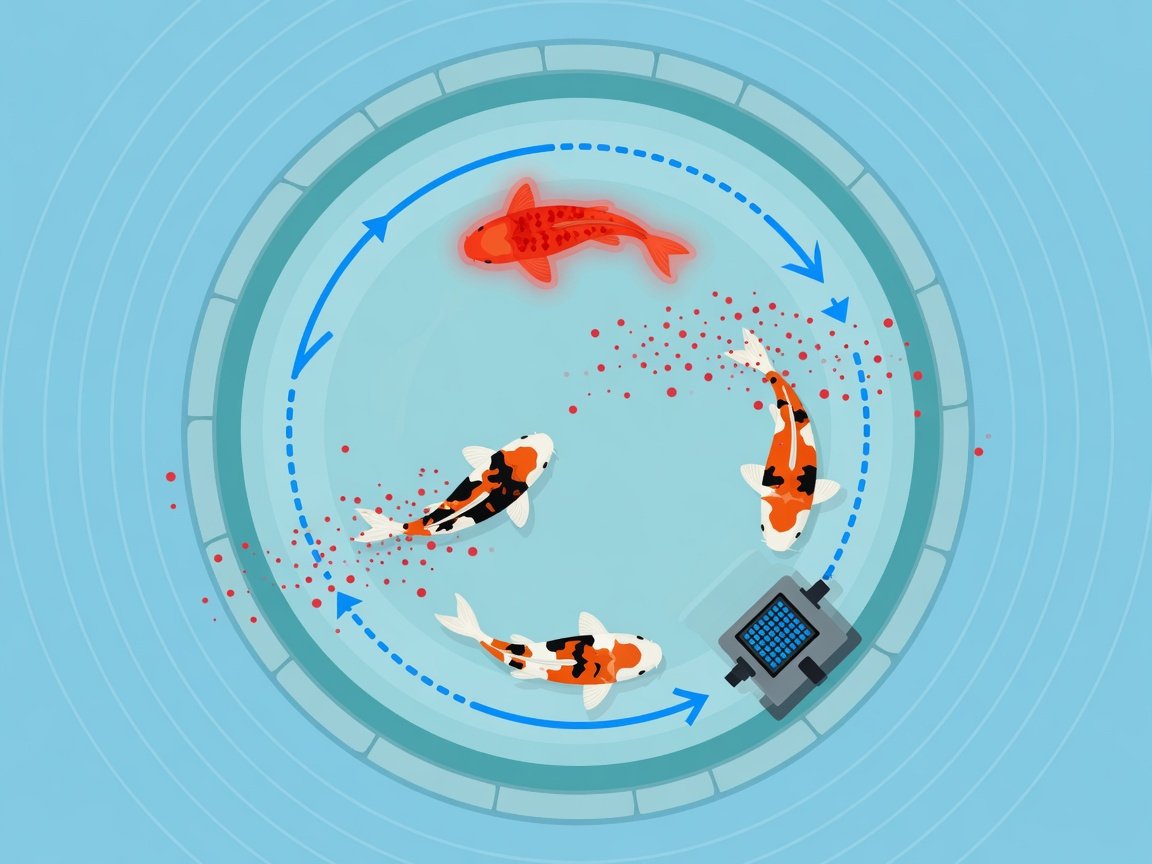
The short answer is an unambiguous yes. An infected koi actively sheds bacterial cells into the water column every minute it remains in the pond. Aquatic microbiologists note that a single infected fish can release millions of bacterial cells per millilitre of surrounding water each day. In a closed pond system with limited water exchange, those concentrations build quickly — especially during warm weather when bacterial replication rates are highest.
That said, contagion is not inevitable. Healthy koi have a natural line of defence in their slime coat — the protective mucus layer that acts as both a physical barrier and an antimicrobial shield against bacterial entry. As long as that slime coat is intact and immune function is strong, even a heavily contaminated pond won’t automatically produce new infections. The danger arises when fish are stressed — through handling, aggression, poor water quality, or rapid temperature changes — and their defences are temporarily lowered.
Think of it like a winter cold circulating through an office. The pathogen is present for everyone, but it’s the tired, run-down individuals who catch it first. Your koi work the same way. The critical difference from an office, though, is that your pond is a sealed system with no ventilation. The bacterial load only accumulates — it never naturally disperses. Water temperatures between 20–28°C allow Aeromonas bacteria to replicate at two to three times the rate seen in cooler water, making late spring and summer the highest-risk seasons for outbreak spread.
How Do Fin Rot Bacteria Spread Through a Pond?
Fin rot bacteria spread through four primary routes in a garden koi pond. Understanding each one lets you block transmission at the source rather than simply reacting to new infections as they appear.
- Water column transmission: The most common route. Infected fish shed bacteria directly into the water, which then circulates to every fish in the pond via your pump and filtration system — essentially delivering the pathogen straight to every koi’s gills and skin.
- Direct fish-to-fish contact: Koi frequently nudge, rub, and occasionally nip one another. Any direct contact between an infected fish and a healthy one transfers bacteria onto the healthy fish’s skin and fin tissue, bypassing the water column entirely.
- Contaminated equipment: Nets, buckets, and hands that touch an infected fish — or its water — can carry active bacteria to healthy fish and even separate pond systems. This is how outbreaks spread between entirely different ponds.
- New fish introductions without quarantine: A recently purchased koi may arrive already harbouring fin rot bacteria without showing visible symptoms. Introduce it directly to a healthy pond and it can seed an outbreak within days.
Reducing the background bacterial load in your water is one of the most effective passive defences you can have. A correctly sized UV steriliser running continuously can eliminate up to 99.9% of free-swimming bacteria in the water column before they ever reach a vulnerable fish. If that’s not currently part of your setup, reviewing the best UV lights for koi ponds is worth doing sooner rather than later — especially if you’ve had disease issues before.
Which Koi Are Most at Risk of Catching Fin Rot?
Not all koi face equal risk when fin rot bacteria are circulating in a pond. Several factors determine which fish will show symptoms first — and knowing them lets you watch the right individuals most closely during an outbreak.
- Juvenile koi and fry: Young fish have thinner, less developed slime coats and less robust immune responses. They are consistently the first to show symptoms when bacterial levels rise.
- Recently introduced fish: New arrivals are stressed from transport, temporarily immunocompromised, and may carry bacterial strains your resident koi have no established resistance to — a dangerous combination.
- Fish recovering from injuries: Any break in the skin or fin from netting, predator strikes, or inter-fish aggression creates a direct entry point for bacteria. An infected wound can progress to active fin rot within 24–48 hours.
- Fish in overcrowded ponds: Aquaculture research consistently shows that disease transmission rates in overstocked systems can run up to 60% higher than in correctly stocked ponds. More fish means more waste, higher ammonia, and more stressed immune systems — all at once.
- Fish exposed to sudden temperature changes: A shift of more than 3–4°C within 24 hours temporarily suppresses the koi immune response, creating a brief but exploitable window of vulnerability that bacteria act on quickly.
How Do You Recognise Fin Rot Before It Spreads?
Catching fin rot early — ideally in the very first fish it affects — is the difference between a straightforward single-fish treatment and a full pond crisis. Here’s what to look for at each stage of progression.
| Stage | What You’ll See | Risk to Other Fish | Action Required |
|---|---|---|---|
| Stage 1 — Early | Slightly frayed fin tips; faint white or grey edging; fish otherwise normal | Moderate — bacteria entering water | Isolate immediately; correct water quality |
| Stage 2 — Active | Fins visibly eroded 25–50%; red streaks at the base; possible lethargy | High — heavy bacterial shedding | Quarantine essential; begin antibacterial treatment |
| Stage 3 — Advanced | Fin base affected; body ulcers may be developing; abnormal swimming | Very high — fish survival also at risk | Urgent treatment; vet consultation strongly advised |
| Stage 4 — Critical | Fin almost fully absent; open wounds on body; fish at surface or bottom | Extreme — possible systemic infection | Immediate professional consultation required |
One of the earliest warning signs that fin rot may be spreading isn’t on the affected fish at all — it’s behavioural changes in your healthy koi. Fish that begin hanging near the surface, rubbing against pond walls, or suddenly losing interest in food may be responding to bacterial irritation on their skin before any visible fin damage appears. At this point, specialist koi pond water testing can confirm whether deteriorating water chemistry is the trigger driving both the infection and those early stress behaviours.
What Should You Do the Moment You Spot Fin Rot?
Speed matters here. Every hour an infected koi stays in your main pond it is seeding more bacteria into the water your healthy fish are swimming in. Work through this sequence without delay.
-
1Test your water immediatelyCheck ammonia, nitrite, nitrate, pH, and dissolved oxygen before doing anything else. This tells you whether poor water quality is fuelling the outbreak. Ammonia above 0.25 ppm or nitrite above 0.1 ppm demands urgent action in its own right.
-
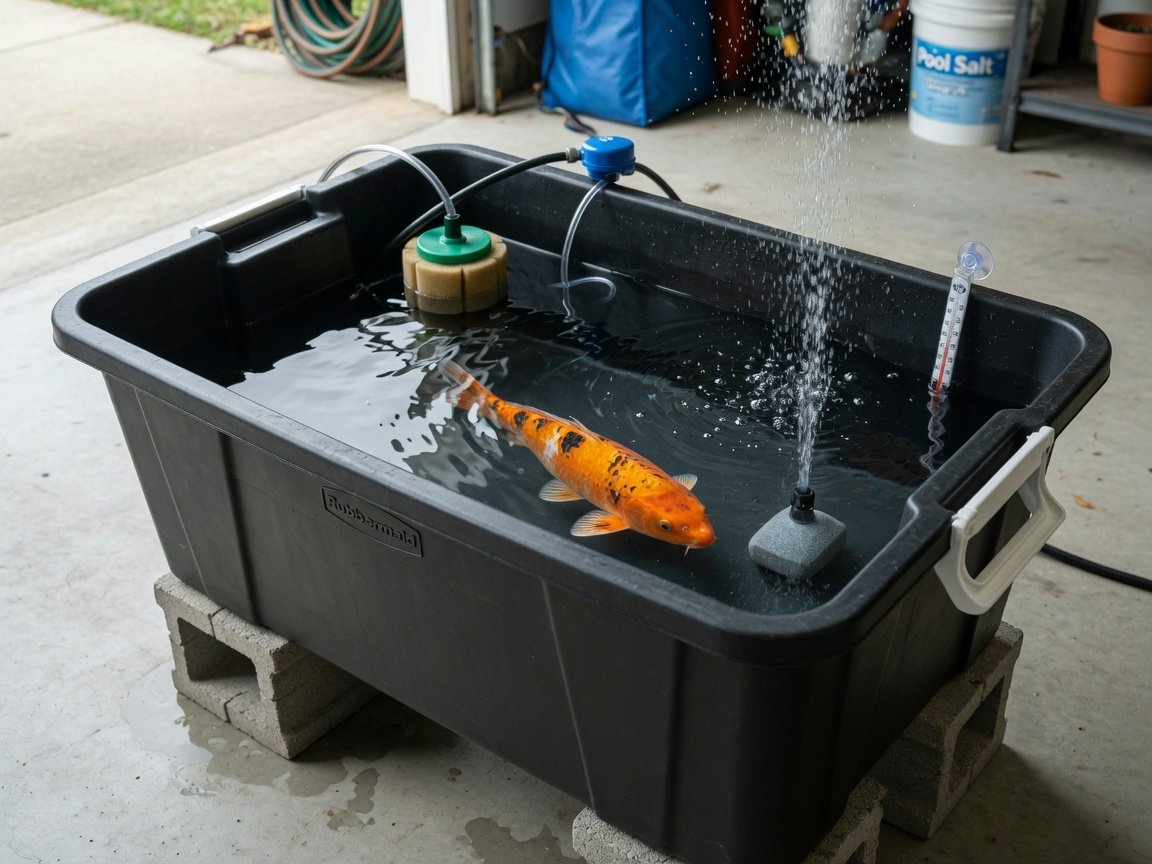
2Isolate the affected fishMove the infected koi to a quarantine container as quickly as you can. Use treated, temperature-matched water — a 100–200 litre tub with an air stone and a simple sponge filter is sufficient for short-term isolation.
-
3Perform a partial water change on the main pondA 20–30% water change immediately dilutes the bacterial concentration in the water column. Treat the replacement water with a quality dechlorinator first. Do not do a 100% water change — you’ll crash your biological filter.
-
4Add pond salt to the main pondNon-iodised pond salt at 3 g per litre (0.3%) helps reduce bacterial load, supports the koi slime coat, and provides osmotic relief to stressed fish. It’s one of the most consistently recommended supportive measures in koi husbandry practice.
-
5Treat the quarantine containerUse a reputable antibacterial fin rot treatment in the quarantine vessel, following the product dosing instructions precisely. Change 30–50% of the quarantine water every 48 hours and re-dose according to the product guidance.
-
6Observe all remaining pond fish dailyCheck every fish at feeding time for a minimum of 14 days after the initial case is identified. Look for fin fraying, discolouration, lethargy, or abnormal swimming. Any new case goes into quarantine immediately.
-
7Disinfect all equipmentAny net, bucket, or tool that touched the infected fish or quarantine water should be rinsed in a dilute bleach solution (1 part bleach to 10 parts water) and allowed to dry fully before it goes anywhere near the main pond again.
For a more in-depth look at the long-term framework behind managing and stopping fin rot entirely, the complete guide to preventing fin rot in koi covers everything from pond design choices to seasonal maintenance routines that keep bacteria from gaining the upper hand.
How Do You Quarantine an Infected Koi Correctly?
Quarantine is the most powerful tool you have against a spreading fin rot outbreak — but only when it’s set up properly. A poorly managed quarantine tank can stress the fish further and actually undermine the treatment you’re trying to deliver.
Your quarantine container doesn’t need to be elaborate. A large plastic tote, a stock tank, or a purpose-built hospital tank all work well. The non-negotiable requirements are a minimum of 100 litres for an average-sized koi, continuous aeration, water temperature matched to the main pond within 1–2°C, and either a small cycled sponge filter or daily partial water changes to control ammonia. Keep the tank shaded and in a quiet area — stress reduction is as much a part of recovery as the antibacterial treatment itself.
Keep the quarantined fish isolated until it has shown no signs of active disease for at least 14 consecutive days. Visible fin regrowth is encouraging but isn’t sufficient on its own — the fish needs to be eating well, swimming normally, and showing healthy, clear fin tissue with no white or reddened margins. Returning a fish to the main pond too early is consistently one of the most common causes of repeat outbreaks reported by pond keepers in 2026.
Why Is Water Quality the Real Driver Behind Fin Rot Outbreaks?
You can treat fin rot with the best antibacterial product on the market and still see it return within weeks — unless the underlying water quality issue is fixed. Aquatic health specialists repeatedly identify poor water quality as a contributing factor in more than 85% of disease outbreaks in garden koi ponds. The bacteria are almost always present. It’s the water conditions that determine whether they remain harmless background organisms or turn into active pathogens.
The three parameters most closely linked to fin rot onset are ammonia, nitrite, and dissolved oxygen. Ammonia above 0.25 ppm directly suppresses the koi immune system at a cellular level. Nitrite interferes with the blood’s ability to transport oxygen, creating a physiological stress response that compromises every fish in the pond simultaneously. Dissolved oxygen below 6 mg/L forces koi to divert metabolic resources from immune function to basic survival. Any one of these conditions alone creates vulnerability. All three together produce the near-ideal environment for a rapid outbreak.
Your filtration system is the first and most critical line of defence. An undersized or poorly maintained biological filter is the most common hidden cause of chronic fin rot problems in otherwise well-managed ponds. If your filter hasn’t been properly serviced in the past three months, that alone may be enough to create the water conditions triggering your outbreak. Investing in a quality koi pond filter correctly sized for your fish load makes a measurable difference to baseline water chemistry — and therefore to your fish’s natural resistance to bacterial infection.
What Are the Best Treatments for Koi Fin Rot in 2026?
The good news is that fin rot caught at stage one or two responds well to treatment, and most koi given prompt, appropriate care make a complete recovery. The approach varies by severity.
For Mild to Moderate Cases
- Pond salt at 0.3% concentration: Non-iodised pond salt at 3 g per litre supports the slime coat, reduces bacterial osmotic stress, and delivers a meaningful bacteriostatic effect. For very early-stage cases combined with water quality improvement, it’s often all that’s needed.
- Proprietary antibacterial treatments: Products containing acriflavine, malachite green, or benzalkonium chloride are widely used for bacterial fin rot in quarantine settings. Always follow dosing instructions precisely — underdosing creates conditions that can select for resistant bacterial strains over time.
- Water quality correction: This is not optional. Without it, treatment addresses only the symptom while leaving the cause fully intact. Correct the water first; everything else follows.
For Advanced or Non-Responsive Cases
- Prescription antibiotics via a vet: In severe or treatment-resistant cases, a veterinary consultation can lead to prescription antibiotics such as oxytetracycline or amoxicillin. These require a valid vet-client-patient relationship in the UK and EU and should not be sourced informally.
- Topical antiseptic application: For localised advanced infection, an experienced practitioner may apply an iodine-based topical antiseptic directly to the affected tissue after careful handling. This should only be carried out with proper guidance to avoid causing additional stress or slime coat damage.
- Supportive environmental management: Maintaining quarantine water at the warmer end of the acceptable range (20–22°C) can support immune recovery without creating conditions that accelerate bacterial growth beyond controllable levels.
Real Case Study: Stopping a Pond-Wide Fin Rot Outbreak
In spring 2026, a pond keeper in the East Midlands contacted a local koi health specialist after spotting white-edged fins on a 45 cm Kohaku that had been introduced to their existing pond of eleven fish three weeks earlier — without any quarantine period. Within 48 hours of that first sighting, two more koi were showing early fin damage.
Water testing revealed ammonia at 0.4 ppm and pH at 8.6. That combination simultaneously suppressed immune function across all twelve fish and compromised the koi slime coat, creating pond-wide vulnerability at the exact moment a new bacterial strain was being introduced. The new Kohaku had almost certainly been carrying a virulent strain of Aeromonas hydrophila to which the existing fish had no established resistance.
The intervention: the Kohaku was moved to quarantine immediately. A 25% water change was performed on the main pond. Non-iodised pond salt was added at 2.5 g per litre. The filter media was gently rinsed in pond water (never tap water, which would kill the beneficial bacteria). Root cause investigation traced the elevated ammonia to an undersized mechanical pre-filter struggling to handle the bioload of twelve fish in a 3,000-litre pond.
The result: No additional fish developed active fin rot after day four of the intervention. The quarantined Kohaku showed visible fin regrowth by week three. By week six, all twelve fish were feeding well, the pre-filter stage had been upgraded, and the pond was recording consistent zero ammonia readings. The deciding factor wasn’t the salt or the antibacterial treatment — it was correcting the filtration deficiency that had created the crisis conditions in the first place.
How Long Before Fin Rot Stops Being a Risk to Other Fish?
This is one of the most practical questions pond owners ask after an outbreak — and the honest answer is: it depends entirely on whether you’ve addressed the root cause. Fin rot bacteria don’t disappear from a pond the way a virus might after burning through a population. These are environmental organisms that will always be present at some background level. What determines whether they pose an ongoing risk is whether conditions still favour their proliferation.
In practical terms, the contagion risk drops to manageable levels once the infected fish has been removed or fully recovered, water quality is consistently within safe parameters, and no new symptoms have appeared in the remaining fish for at least 14 days. That is your minimum observation window before you can reasonably conclude the outbreak has resolved.
Most pond owners report no new cases appearing after five to seven days of combined quarantine and water management, with the subsequent 14-day watch period acting as a precautionary buffer. Don’t be tempted to shorten that window — fin rot has a well-earned reputation for appearing to resolve and then resurging if conditions aren’t fully corrected. Seasonal transitions are a common trigger for resurgence; staying on top of seasonal pond care for koi significantly reduces the risk of a temperature-driven relapse as the year moves into autumn and spring.
How Do You Prevent Fin Rot from Coming Back?
Once an active outbreak is resolved, the goal shifts entirely to preventing the next one. The good news is that the same measures that contained the first outbreak are also the measures that stop future ones. Prevention isn’t complex — but it does require consistency.
- Always quarantine new fish for at least 14–21 days before introducing them to an established pond. This single habit eliminates the most common route through which new bacterial strains enter a healthy system.
- Test water weekly as a minimum — more frequently during summer and after any new additions. Ammonia, nitrite, and pH are the three parameters that matter most for fin rot prevention. Catching a water quality issue early costs a fraction of the effort of dealing with a disease outbreak.
- Match your filtration to your actual bioload. The number one cause of chronic fin rot problems in garden ponds is a filter that’s undersized or poorly maintained for the fish it’s serving. A correctly sized biological and mechanical filter is the foundation everything else is built on.
- Maintain sensible stocking density. The general guidance of 25 cm of koi per 1,000 litres exists for sound biological reasons. Pushing beyond it stresses both fish and filtration simultaneously.
- Keep up with pond hygiene between seasons. Accumulated sludge, decomposing leaf matter, and uneaten food all drive ammonia spikes that shift bacterial balance in the wrong direction. Spring and autumn cleanouts are not optional in a mature koi pond.
- Consider UV sterilisation as permanent infrastructure. A correctly sized UV unit running continuously is one of the most passive and effective disease-prevention tools available — reducing background bacterial load before it ever reaches your fish.
Physical handling is also worth thinking about. Even routine interaction with your koi — for health checks, relocating fish during pond maintenance, or simply feeding — can strip slime coat and create entry points for bacteria if done carelessly. Understanding the health risks of touching koi and handling them correctly is a small but meaningful part of keeping bacterial infection out of the equation.
Looking ahead to 2026–2027, ornamental fish medicine is seeing growing interest in probiotic pond additives — bacterial consortiums that compete with pathogenic species for resources and help stabilise the pond microbiome. Early practitioner reports are promising, and while this isn’t a replacement for good husbandry, it may become a meaningful supplementary tool for high-value koi collections in the coming seasons.
Frequently Asked Questions: Is Koi Fin Rot Contagious?
Can fin rot kill koi?
Yes, in advanced stages. Fin rot that reaches the fin base can progress to body ulcers, systemic bacterial infection, and organ failure. Early-stage fin rot caught and treated promptly is very rarely fatal — most fish at stage one or two make a full recovery with proper care.
How quickly does fin rot spread between koi?
In poor water quality conditions with stressed fish, new infections can appear in previously healthy koi within 48–72 hours of the first case being identified. In well-maintained ponds with good water quality, spread may be much slower or not occur at all — the fish’s immune defences hold the bacteria in check.
Can I treat fin rot without quarantining the fish?
You can, but it’s significantly less effective and more expensive in terms of treatment volumes. Treating the whole pond rather than isolating the source means dosing a much larger water volume, which reduces treatment concentration and effectiveness. Quarantine of the infected fish is strongly recommended.
Does fin rot go away on its own?
Very early-stage fin rot may appear to stabilise if water quality improves significantly, but active bacterial fin rot does not reliably resolve without intervention. In most cases, untreated fin rot progresses. Do not wait to see if it clears — the earlier you act, the better the outcome for the fish and the lower the risk to the rest of your pond.
Can fin rot spread from koi to goldfish in the same pond?
Yes. The same bacterial species responsible for fin rot in koi — particularly Aeromonas and Pseudomonas — can infect goldfish and other pond fish. In a mixed pond, all species are at risk once bacterial levels rise. Goldfish with damaged fins should be monitored just as closely as affected koi.
Is fin rot the same as tail rot?
Tail rot is fin rot affecting the caudal (tail) fin specifically. The cause, progression, and treatment are identical. The distinction is purely anatomical. Both present with the same bacterial species and respond to the same intervention — isolation, water quality correction, and appropriate antibacterial treatment.
Can humans catch anything from a koi with fin rot?
The risk to healthy adults is very low. Aeromonas hydrophila can in rare circumstances cause infection in humans with open cuts or severely compromised immune systems who come into prolonged contact with contaminated water. Good practice — wearing gloves when handling infected fish or their water, and washing hands thoroughly afterwards — is sufficient to manage this risk for the vast majority of pond keepers.
What to Do Next: Your Action Plan for Fin Rot in 2026
Koi fin rot is contagious — but it’s also very manageable when you act quickly and address both the symptom and the root cause simultaneously. The bacteria causing it are almost certainly already in your pond. What determines whether they become a crisis is the quality of your water, the resilience of your fish, and how fast you respond when the first signs appear.
Here’s your immediate action sequence if you suspect fin rot right now:
- This hour: Test your water for ammonia, nitrite, and pH.
- Today: Isolate any visibly affected fish into a quarantine container with matched water temperature and aeration.
- Today: Perform a 25% water change on the main pond and add non-iodised pond salt at 3 g per litre.
- This week: Begin antibacterial treatment in the quarantine vessel; identify and fix the root cause (filtration, stocking density, or new fish introduction).
- Next 14 days: Observe all remaining pond fish daily; test water every two to three days; no new fish introductions.
- Ongoing: Establish a weekly water testing habit, review your filter capacity, and commit to quarantining any new fish for a minimum of 14 days before pond introduction.
Done correctly, most fin rot outbreaks are fully contained within a week. The fish that started it all are usually back in the main pond, fins regrown and healthy, within six weeks. The pond owners who struggle are invariably the ones who treated the fish without fixing the water — or who skipped quarantine on the next purchase. Don’t be that pond keeper.