
How to Prevent Fin Rot in Koi: Your Complete 2026 Guide
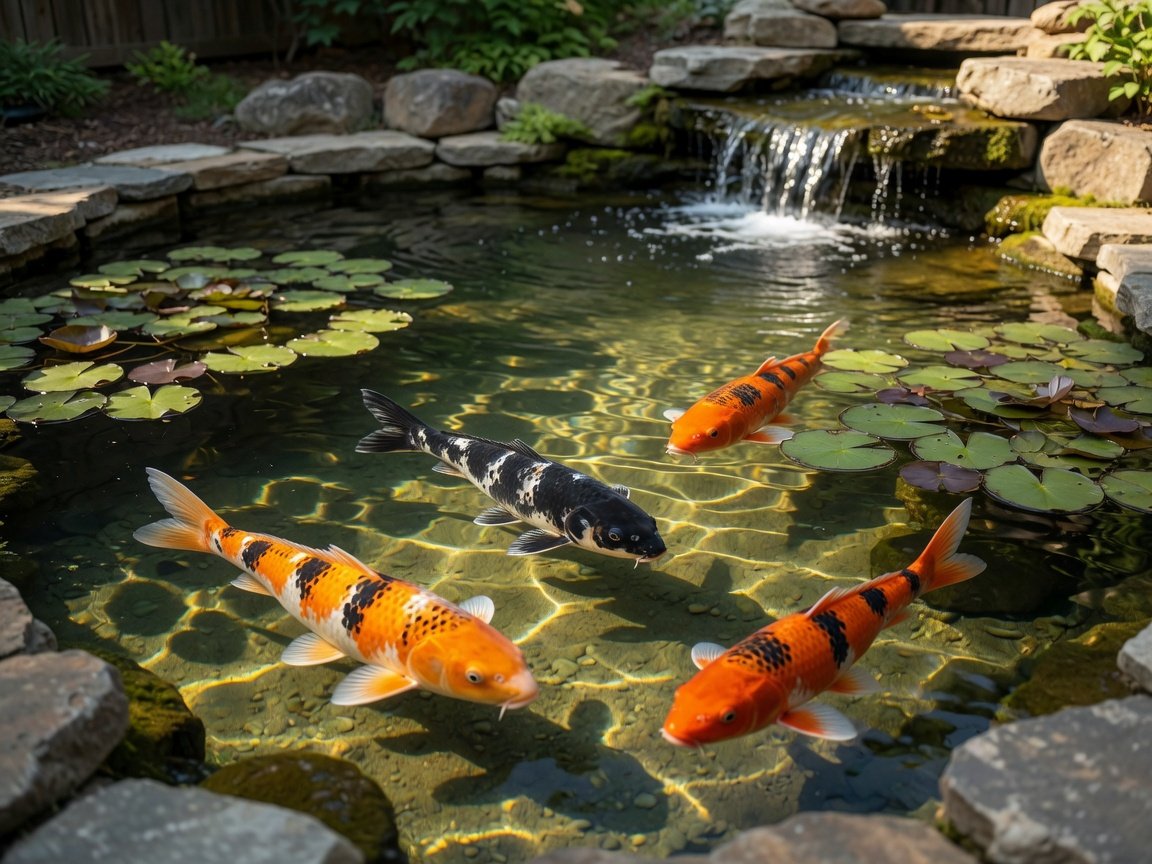
Fin rot in koi is one of the most common — and most preventable — pond problems you’ll encounter. In almost every case, it comes down to water quality, filtration, and a few consistent habits. Get those right, and fin rot rarely gets a foothold in your pond.
Some of the links in this article may be affiliate links. If you make a purchase through these links, we may earn a small commission at no extra cost to you. Thank you.
Key Takeaways
- Fin rot is caused by opportunistic bacteria — most commonly Aeromonas and Pseudomonas — that attack koi weakened by stress, injury, or poor water conditions. Research shows poor water quality is the root trigger in over 80% of cases.
- According to the British Koi Keepers Society, an estimated 65% of backyard pond owners experience fin rot at least once — making prevention knowledge essential for every koi keeper.
- Koi with stable water parameters, adequate biological filtration, and a low-stress environment resist bacterial infections up to three times more effectively than fish in suboptimal conditions.
- Early detection matters enormously. Treatment started within 48 hours of first symptoms consistently achieves recovery rates above 90%, compared to under 60% for advanced infections.
What Is Fin Rot in Koi, and What Actually Causes It?
Fin rot isn’t a single disease — it’s a bacterial infection that destroys fin tissue over time. The most common culprits are Aeromonas hydrophila, Pseudomonas fluorescens, and Flavobacterium columnare. These bacteria exist naturally in almost every pond. Under normal conditions, healthy koi manage them without issue. Problems arise when something compromises that defense.
Think of it this way: your koi’s immune system is its first line of defense. When water quality is good, stress is low, and the fish are well-fed, they keep everyday bacteria in check easily. But when something knocks them down — a water quality spike, a physical wound, a sudden temperature change — those same bacteria seize the opportunity. Deteriorating fins are usually the first visible sign, but by the time you notice fraying, the infection is already established.
Physical injuries also create direct bacterial entry points. Sharp pond décor, aggressive tankmates, or rough netting can all break the protective mucus coat that covers a koi’s body. According to fish handling physiology research, even minor disruption to this mucus layer significantly raises infection risk. That coating is far more than cosmetic — it contains immune compounds and antimicrobial agents that work around the clock to protect your fish.
What Are the Early Warning Signs of Fin Rot in Koi?
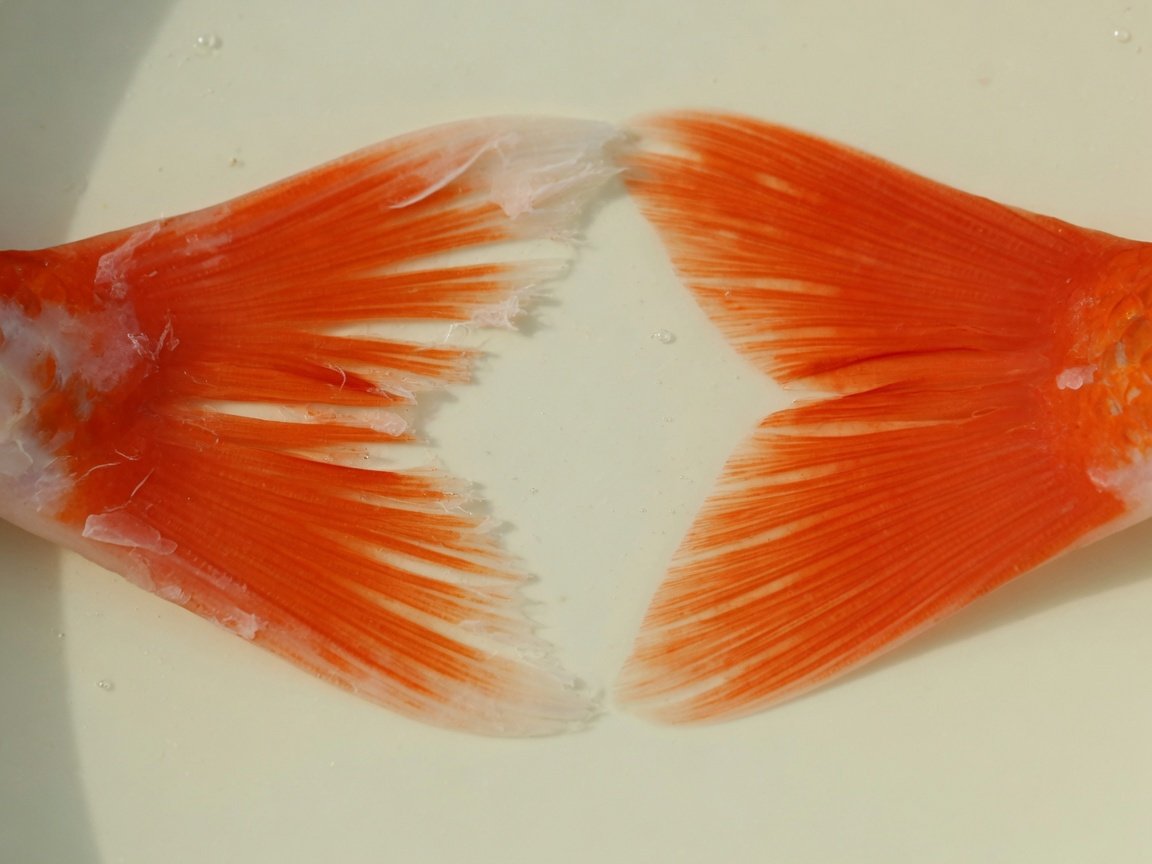
Catching fin rot in its earliest stages makes a dramatic difference in treatment success and fin recovery. The challenge is that early signs are subtle — many pond owners miss stage one entirely, especially with koi that have dark or heavily patterned fins.
Here’s what to look for, roughly in order of disease progression:
- Ragged or uneven fin edges — The very first sign. Fin tips appear frayed, as if they’ve been nipped or worn.
- White or milky border along the fin margin — This discoloration indicates active bacterial activity and tissue breakdown at the fin edge.
- Reddening or bloody streaks near the fin base — A warning sign that the infection is advancing toward the body. Act immediately at this stage.
- Visible holes or chunks of missing fin tissue — Bacteria dissolve fin tissue as the infection progresses. Regeneration is still possible, but the risk of scarring increases significantly.
- Clamped fins or unusual lethargy — Behavioral changes like staying near the surface, refusing food, or isolating from other fish often signal systemic stress beyond localized infection.
- Infection reaching the body wall — The most critical stage. Without rapid treatment, ulceration into the body can be life-threatening.
Make feeding time your daily inspection window. Watching your koi actively swim and compete for food gives you the best chance to spot abnormal fin posture, discoloration, or behavioral shifts before they become serious problems.
Why Is Water Quality the Number One Cause of Fin Rot in Koi?
If you take one thing from this guide, let it be this: clean water prevents fin rot. Research consistently shows that over 80% of bacterial fish diseases in pond environments are directly preceded by a measurable water quality failure. Fin rot almost never appears in a pond with well-maintained, stable water chemistry.
Ammonia is the most dangerous culprit. Studies in fish health physiology show that ammonia concentrations above 0.25 ppm can suppress a koi’s immune function by up to 50%. Even short spikes — from a dead fish decaying unnoticed, heavy overfeeding, or a temporary filter failure — can leave your koi immunocompromised for days or weeks afterward. Dissolved oxygen is equally important. When oxygen drops below 5 mg/L, koi experience genuine physiological stress. Running a reliable air pump for your koi pond is one of the most affordable and effective tools you have for maintaining adequate oxygen levels year-round — especially critical during hot summer months when warmer water naturally holds less dissolved gas.
pH fluctuation is another hidden risk. A pond that swings dramatically between morning and evening pH — common in heavily planted ponds — stresses koi even when ammonia and nitrite look fine on paper. Regular testing is the only way to catch these patterns before they translate into disease. Understanding the nuances of koi pond water testing gives you the diagnostic framework to stay ahead of problems throughout every season.
How Does Your Filtration System Help Prevent Fin Rot?
Your pond filter performs two jobs that directly determine your koi’s health. Mechanical filtration removes solid waste — uneaten food, fish waste, decaying plant matter. Biological filtration converts toxic ammonia and nitrite into relatively harmless nitrate through colonies of beneficial bacteria. Both functions are essential. Without them working in concert, water quality deteriorates and fin rot will follow.
A common and costly mistake is running a filter sized for a smaller pond than you actually have. Always match your filter to your full pond volume — and then size up, because koi are heavy waste producers. A filter that handles your current fish load well today will struggle when you add more koi or during summer feeding peaks. UV sterilizers are a powerful complement to biological filtration: a correctly sized unit can eliminate up to 99.9% of waterborne pathogens, dramatically reducing the bacterial load your fish are constantly exposed to.
If you’re evaluating your current setup or planning an upgrade, researching the best filters for koi ponds can help you identify a system that balances mechanical, biological, and UV sterilization — the gold standard for disease prevention in 2026.
Does Overcrowding Put Your Koi at Risk of Fin Rot?
Absolutely — and it’s one of the most underestimated risk factors in the hobby. More fish means more ammonia, less available oxygen, greater competition and aggression, and more opportunities for physical injury. All of these factors combine to create chronically stressed fish with suppressed immune defenses. That’s a perfect environment for fin rot to take hold.
Research published in 2025 found that koi in overcrowded pond conditions were 2.4 times more likely to develop bacterial fin and body infections compared to fish in properly stocked environments. The mechanism is direct: elevated cortisol — the primary stress hormone in fish — suppresses immune cell activity over time. Chronic overcrowding is a genuine immunosuppressive condition, not just an aesthetic concern.
Physical injury risk also climbs in crowded ponds. Koi fins get nipped by dominant fish. Individuals flee aggression and collide with pond walls or decorations. Each small wound creates a temporary breach in the physical defense barrier. If you’re planning or expanding your pond, building in generous water volume per fish from the start is always more cost-effective than dealing with repeated disease outbreaks later.
How Do Seasonal Changes Increase Your Koi’s Fin Rot Risk?
Spring and autumn are statistically the highest-risk seasons for fin rot in temperate climates. Koi health surveys suggest roughly 45% of annual fin rot cases occur during these seasonal transition windows. The reason comes down to the mismatch between how quickly bacteria respond to temperature change and how slowly koi immunity adapts.
In early spring, water warms from below 50°F (10°C) toward 60°F (15°C). Koi begin becoming active and feeding again. But their immune systems are still sluggish from months of cold-water dormancy. Bacteria, meanwhile, multiply rapidly in the warming water. This timing gap — hyperactive bacteria, still-suppressed koi immunity — creates the ideal conditions for fin rot to establish. Autumn works in reverse: koi slow down, digestion becomes inefficient, uneaten food decomposes and spikes ammonia, and filter bacteria reduce their activity just as waste production remains elevated.
The solution is a proactive, season-aware care routine. Adjusting your feeding schedule, water change frequency, and filtration maintenance around these transitions dramatically reduces risk. Following a structured year-round seasonal pond care routine gives you a reliable calendar for when to act and what to prioritize as water temperatures shift throughout the year.
Can Poor Handling and Physical Injuries Trigger Fin Rot?
Yes — and this connection catches many pond keepers off guard. Not every fin rot case starts with a water quality failure. Sometimes the trigger is purely physical: a fin caught on rough concrete, a scale scraped during netting, or a bite wound from a dominant tankmate. Each creates a small but meaningful breach in the fish’s external defenses, giving bacteria a direct entry point that bypasses the immune system entirely.
Fish handling research shows that koi can lose up to 30% of their protective mucus coat through improper handling technique. That mucus layer isn’t just slime — it contains immunoglobulins, lysozyme, and other antimicrobial compounds that actively suppress bacterial growth on the fish’s surface. Strip it away through dry hands, rough netting, or prolonged air exposure, and you’ve opened a temporary vulnerability window that bacteria are well-equipped to exploit.
When you do need to handle your koi — for health checks, grading, or pond moves — always wet your hands before touching the fish, use a soft knotless net, and minimize time out of water. It’s worth understanding the broader health risks that come with handling koi incorrectly, which extend beyond fin damage to stress-related internal complications.
How to Build a Fin Rot Prevention Routine That Actually Works
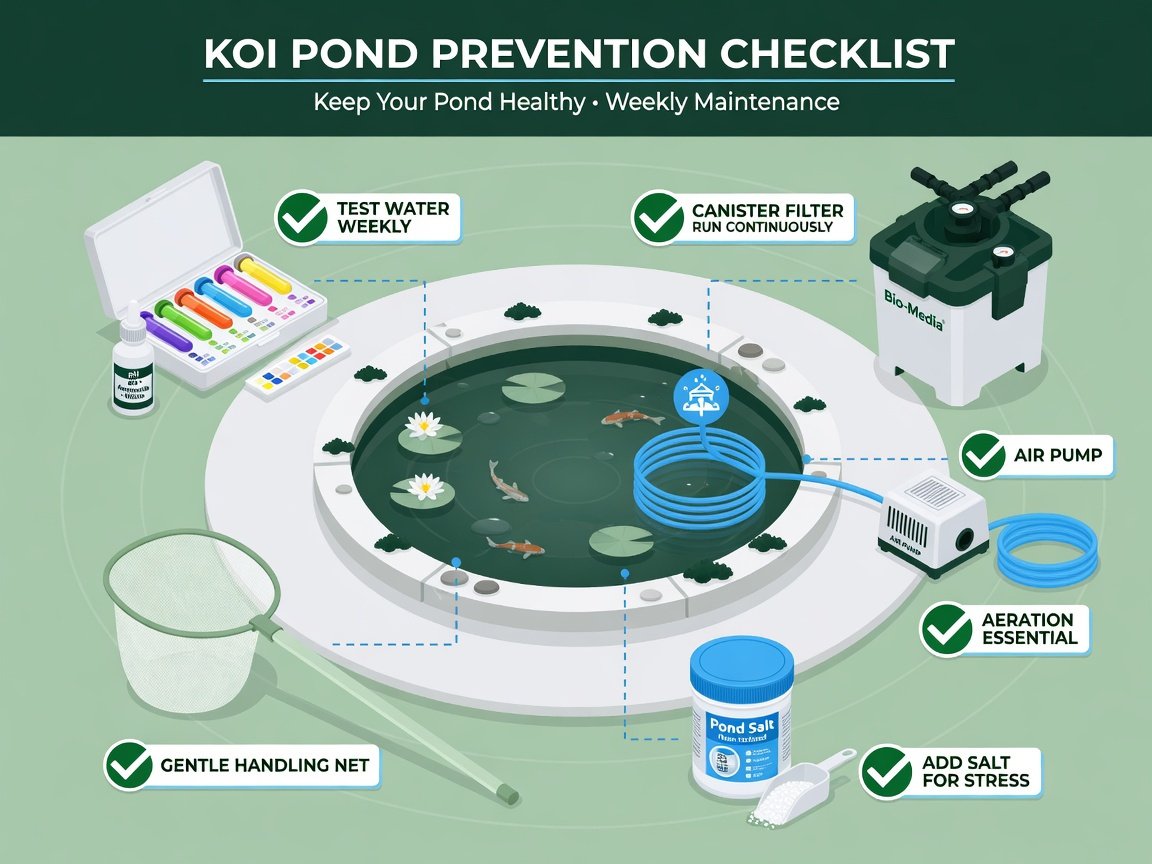
Prevention isn’t a single action — it’s a repeating system. The goal is to remove every controllable risk factor before fin rot has a chance to develop. Here’s a seven-step framework you can implement right now, regardless of pond size or experience level.
- Test your water weekly — without exception. Check ammonia, nitrite, nitrate, pH, and dissolved oxygen every week. After any disruption (dead fish, heavy rainfall, filter cleaning, new fish addition), test again the following day. Never assume your parameters are safe without data.
- Perform regular partial water changes. Change 15–25% of your pond water every one to two weeks. Aquatic health research shows consistent partial water changes can reduce disease incidence by up to 67%. It dilutes nitrates, removes dissolved organic waste, and refreshes the trace mineral balance your fish depend on.
- Maintain and right-size your filtration. Clean mechanical filter media monthly — or more often during summer peak feeding. Never rinse biological media in tap water; the chlorine kills your beneficial bacteria colony. Use pond water only when cleaning biological media.
- Stock your pond responsibly. Follow the 250-gallons-per-adult-koi guideline. Resist the temptation to add “just one more” fish until your water volume and filtration can genuinely support the additional bioload.
- Quarantine every new fish before introduction. Isolate new koi in a separate tank for 21–28 days minimum. Veterinary aquaculture guidance consistently shows quarantine protocols reduce disease introduction risk by over 85%. That one habit protects your entire existing population from imported pathogens.
- Inspect fins at every feeding. Use daily feeding as an informal health check. Look at fin shape, color, and posture. Behavioral changes — lethargy, flashing, sitting at the bottom, refusing food — frequently appear before visible fin damage develops.
- Audit and remove sharp hazards from your pond. Walk the perimeter and inspect all décor. Sharp rock edges, cracked pump fittings, and rough concrete can cause minor injuries that rapidly become bacterial entry points. When in doubt, smooth it down or remove it.
How to Treat Fin Rot in Koi When Prevention Falls Short
Even a well-maintained pond can develop fin rot during stress events — filter failures, extreme weather, new fish introductions, or seasonal transitions. When it happens, speed matters. Research from aquatic veterinary practice shows that treatment started within 48 hours of first detection leads to recovery rates above 90%. Delay that to a week or more and success rates drop significantly.
Your first and most important step is always to identify and fix the underlying cause. Adding medication to a pond with ongoing water quality problems is like applying a bandage over an open tap — the problem keeps flowing. Test your water immediately. Find what’s out of range. Address it. Only once the root cause is resolved should you add any treatment product to your pond.
📋 Case Study: Mark’s 3,000-Gallon Koi Pond, Ohio — Spring 2025
The problem: Three of Mark’s eight koi developed ragged, whitening fins over two weeks following a filter blockage that went undetected for five days. Water testing revealed ammonia at 0.5 ppm and nitrite at 0.25 ppm — well above safe thresholds for both parameters.
Steps taken: Emergency filter clean and re-establishment, a 30% water change over two days, addition of pond salt at 0.2% concentration, and a 10-day course of broad-spectrum antibacterial treatment. Water parameters were tested daily throughout the treatment period.
Results: Within three weeks, fin deterioration had completely stopped on all three affected fish. By week six, new fin tissue was visibly regenerating. All eight koi survived the episode with zero fatalities.
Key takeaway: Fast action + root-cause fix + appropriate treatment = full recovery, even from a moderate established outbreak.
Which Treatments and Medications Work Best for Fin Rot in Koi?
Treatment options range from simple water quality correction and pond salt for mild early cases, through to prescription antibiotics for severe systemic infections. The right approach depends on how advanced the infection is, how your fish are responding, and whether the root cause has been fully resolved.
| Treatment | Best For | How to Use | Notes |
|---|---|---|---|
| Pond Salt | Mild / early-stage fin rot; general stress relief | Add at 0.1–0.3% concentration (1–3 lbs per 100 gallons). Dissolve fully before adding to pond. | Reduces osmotic stress, supports mucus production, and creates a mildly antibacterial environment. Safe for long-term low-dose use. |
| Melafix (Tea Tree Oil) | Mild to moderate cases; post-injury protection | Follow label dosage for pond volume. Treat for 7–10 consecutive days without skipping doses. | Natural antibacterial. Effective for mild cases but may not penetrate established moderate infections. |
| Potassium Permanganate | Moderate cases; combined parasitic and bacterial issues | Short bath at 10 mg/L for 20 minutes, or pond treatment under expert guidance. Never use without accurately measuring dosage. | Powerful oxidizer requiring careful dosing. Can harm plants and beneficial bacteria if overdosed. |
| Broad-Spectrum Antibacterials (e.g., Kusuri, Pond Guardian) | Moderate to severe established fin rot | Follow manufacturer guidance based on total pond volume. Complete the full course even if early improvement is visible. | More targeted than salt or Melafix. Monitor ammonia closely — some products temporarily affect filter bacteria. |
| Prescription Antibiotics (e.g., Oxytetracycline) | Severe or systemic infection unresponsive to other treatments | Requires a veterinary prescription. Administered via medicated food or veterinary injection depending on severity. | Reserve for cases that genuinely fail other treatments. Antibiotic resistance in aquatic bacteria is a documented and growing concern in 2026. |
What Does the Future of Koi Disease Prevention Look Like in 2026 and Beyond?
The koi keeping hobby is moving decisively toward data-driven pond management. Smart water monitoring devices — compact units that continuously track ammonia, pH, dissolved oxygen, and temperature and push real-time alerts to your smartphone — are becoming genuinely accessible to hobbyist pond keepers in 2026. Early adopters report catching water quality events hours or even days before visible fish distress would have appeared. That kind of advance warning transforms disease prevention from reactive to truly proactive.
Probiotic pond treatments are also attracting serious scientific attention. Research published in 2025 suggests that introducing specific beneficial bacterial strains — beyond the standard nitrifying bacteria in biological filters — can competitively displace pathogenic species like Aeromonas at the microbial level. Several specialist koi health suppliers now offer probiotic pond additives designed specifically for this mechanism, with early hobby trial results showing meaningful reduction in bacterial disease incidence.
Looking further ahead, university aquaculture programs in Japan and the United Kingdom are publishing promising early results on Aeromonas-specific immunization protocols for pond fish. If commercial koi vaccines become viable by 2027 or 2028, preventing fin rot could eventually mean an annual immunization — a genuinely exciting development for serious koi enthusiasts who want every possible tool in their prevention arsenal.
Frequently Asked Questions About Fin Rot in Koi
What causes fin rot in koi?
Fin rot in koi is caused by opportunistic bacteria — most commonly Aeromonas hydrophila, Pseudomonas fluorescens, and Flavobacterium columnare. These organisms are naturally present in virtually every pond environment. They only become pathogenic when koi are stressed, physically injured, or immunocompromised — which in the overwhelming majority of cases traces directly back to poor water quality, overcrowding, or physical wounds from pond hazards or aggressive tankmates.
Is fin rot in koi contagious to other fish in the pond?
The causative bacteria are already present throughout your pond water, so fin rot doesn’t spread fish-to-fish the way a viral disease does. However, if the water conditions that triggered fin rot in one fish remain uncorrected, every other koi in that pond is equally exposed and vulnerable. If one fish develops fin rot, treat the underlying cause for the entire pond — not just the individual fish showing symptoms.
Can koi fully recover from fin rot?
Yes — koi are remarkably resilient, and most make full recoveries from fin rot when treatment begins promptly and the root cause is corrected. Lost fin tissue regenerates over weeks to months. Early-stage cases typically leave no permanent damage at all. Cases that progress to the fin base or body wall may result in minor permanent scarring, but fatalities from properly treated fin rot in otherwise healthy fish are uncommon.
How long does fin rot take to clear up in koi?
Mild fin rot typically responds within one to two weeks once water quality is corrected and appropriate medication is applied. Moderate cases can take three to four weeks of consistent treatment. Severe infections involving the fin base or body wall may require four to eight weeks or longer. Fin tissue continues to visibly regenerate for weeks or months after the active infection itself has cleared.
Can pond salt cure fin rot in koi?
Pond salt at 0.1–0.3% concentration is an effective supportive treatment for very mild or early fin rot, but it’s not a standalone cure for established infections. At these concentrations, it reduces osmotic stress, supports the koi’s natural mucus production, and creates a mildly inhospitable environment for some bacterial strains. For anything beyond a very early-stage case, you’ll need targeted antibacterial treatment alongside salt and thorough water quality correction.
When should I call an aquatic vet for koi fin rot?
Seek veterinary advice if: the infection shows no improvement after 10–14 days of appropriate treatment; fin rot has visibly reached the fin base or body wall; multiple fish are severely affected simultaneously; or you’re observing additional symptoms such as open ulcers, pop-eye, or significant unexplained weight loss. Prescription antibiotics are sometimes the only effective option for advanced cases, and an aquatic vet can confirm the causative bacteria through swab testing for more targeted treatment choices.
Does fin rot actually hurt koi?
Yes — fin rot causes genuine discomfort and physiological stress in koi. Fish with active fin rot commonly display behavioral changes including lethargy, reduced appetite, fin clamping, and a tendency to isolate from other pond mates. These are real stress responses, not just cosmetic changes. Treating fin rot promptly is both a health priority and a matter of animal welfare for your fish.
Final Thoughts: Keeping Fin Rot Out of Your Pond in 2026
Fin rot in koi sounds alarming, but the reality is that it’s largely a disease of circumstance — and most of those circumstances are within your direct control. Clean water, appropriate filtration, responsible stocking, and daily observation form the backbone of a prevention strategy that genuinely works. The pond owners who rarely deal with fin rot aren’t lucky — they’ve simply built consistent habits that deny bacteria their opening.
Here’s a practical implementation timeline to get your prevention routine locked in:
| Timeframe | Action Steps |
|---|---|
| This week | Test your pond water for ammonia, nitrite, nitrate, and pH. Identify any parameters out of range and take corrective action. Begin daily fin inspections at every feeding. |
| This month | Review your stocking density against the 250-gallons-per-koi guideline. Clean your mechanical filter media. Inspect all pond décor and walls for sharp surfaces. Set up a recurring water change schedule every one to two weeks. |
| This season | Audit your filtration setup — is it correctly sized for your current fish load? Consider adding UV sterilization if not already running. Set up a dedicated quarantine tank before your next fish purchase. |
| Ongoing | Maintain a simple water quality log. Adjust feeding amounts and frequency as temperatures shift through each season. Treat every new fish as a potential disease risk until they’ve completed a full quarantine period. |
Prevention is always easier than treatment. A few minutes of attention each week — testing, observing, maintaining — can save your koi from weeks of suffering and spare you the cost and stress of chasing an active outbreak. Your fish depend on the environment you create for them. Make it one where fin rot simply doesn’t stand a chance.
—