
Water penny beetles are freshwater’s most underrated cleanup crew. These tiny, copper-coloured larvae — measuring just 3 to 10 mm — scrub rivers and streams clean by feeding on algae and decaying organic matter. And here’s the clever part: finding one is practically a certified water quality report. Their presence alone tells scientists that the water is clean, well-oxygenated, and ecologically sound.
Some of the links in this article may be affiliate links. If you make a purchase through these links, we may earn a small commission at no extra cost to you. Thank you.
Freshwater ecosystems cover less than 1% of Earth’s surface yet support approximately 10% of all known species on the planet. The creatures that keep those systems functioning — including the water penny beetle — often go unnoticed until they disappear. According to WWF Living Planet Index data, freshwater vertebrate populations have declined by an average of 83% since 1970, a figure that underlines just how much pressure these ecosystems are under. Understanding what water penny beetles do, how they live, and why they matter is one of the most useful things any pond or stream steward can do.
Key Takeaways
- Water penny beetle larvae are sensitive bioindicators — their presence confirms clean, well-oxygenated water
- Their flat, copper-toned bodies and suction-grip feet let them thrive in fast-moving currents
- They actively reduce algal blooms by grazing on algae and consuming detritus
- The full life cycle — egg to larva to pupa to adult — spans months to over a year, with larvae surviving harsh winters
- Protecting their habitat is protecting the entire freshwater food web
What Exactly Is a Water Penny Beetle?
The water penny beetle belongs to the family Psephenidae, a group of aquatic beetles found on every inhabited continent. The family contains around 270 recognised species worldwide — from cold mountain streams in North America and Europe to tropical rivers in Asia and Africa. Despite that geographic spread, all species share the same remarkable larval form that gives them their common name.
The larva is the stage most people encounter — and most people confuse with something else entirely. Flat, round, and brownish-copper, a water penny looks more like a tiny shield or a miniature horseshoe crab than a beetle larva. That shape is no accident. It allows the larva to press flush against rock surfaces, using friction and specialised suction-like structures on its underside to resist even powerful currents. If you’ve ever tried to peel one off a streambed stone, you know how effective the grip is.
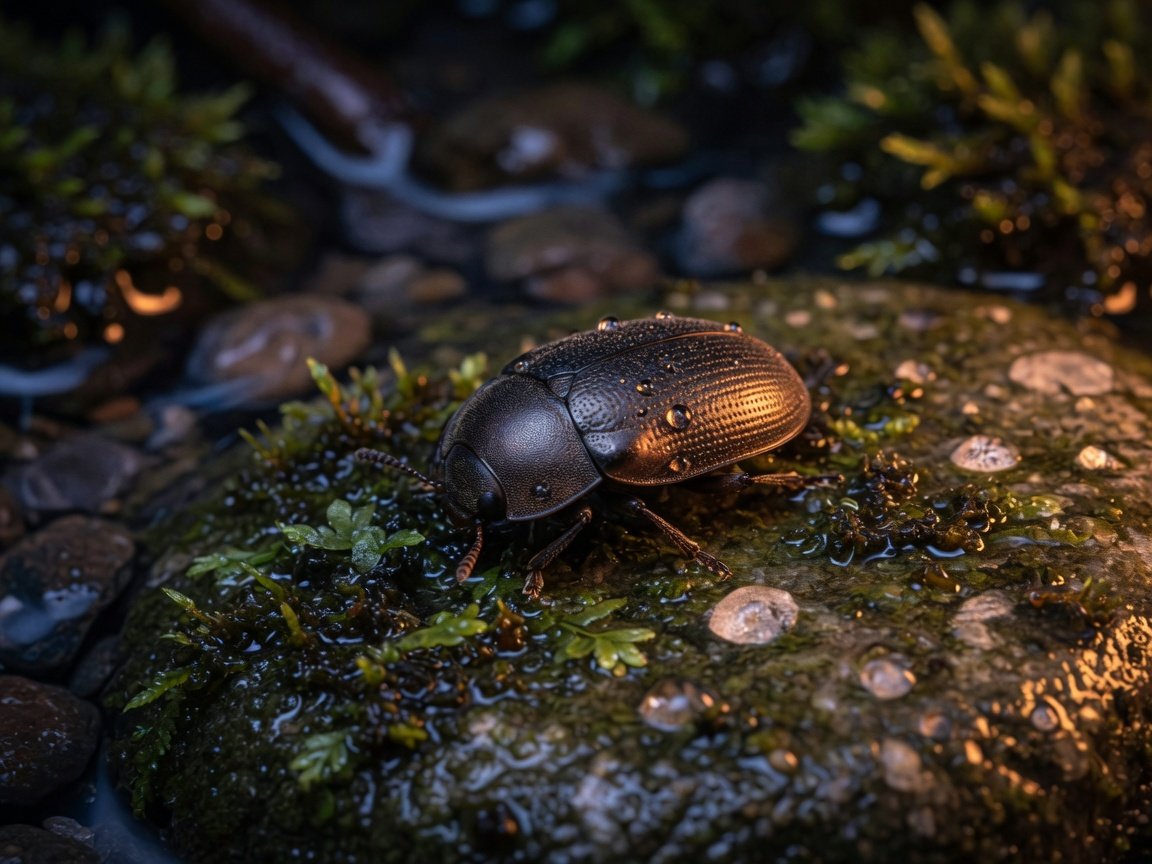
Adult water penny beetles look completely different. They’re dark, shiny, and oval-shaped — roughly 4 to 6 mm long — and resemble any number of unremarkable small beetles you might spot near a stream bank at night. Adults are primarily terrestrial and nocturnal. They emerge to breed, lay eggs, and return to the shadows. Most people never see one.
Why Are Water Penny Beetles Important Freshwater Bioindicators?
A bioindicator is a species whose presence, absence, or abundance reflects the condition of its environment. Water penny beetle larvae are among the most reliable freshwater bioindicators ecologists use — and understanding why they hold that status reveals a great deal about what they actually do for a waterway.
Water pennies are highly intolerant of pollution. They need well-oxygenated, clean water to survive. When a stream is degraded by agricultural runoff, sewage discharge, or industrial contamination, water penny populations crash long before the damage becomes visually obvious. Environmental scientists use this sensitivity in macroinvertebrate bioassessment programmes — systematic surveys that assess water health by cataloguing which invertebrates are present and in what numbers.
In biological scoring systems like the Hilsenhoff Biotic Index (widely used in North America) and the BMWP score (used across Europe), pollution-sensitive organisms receive the highest scores. A watercourse dominated by sensitive taxa like water pennies is thriving; one populated mainly by pollution-tolerant species like midge larvae signals trouble. According to the US Environmental Protection Agency’s macroinvertebrate bioassessment guidance, the presence of pollution-intolerant families like Psephenidae is one of the strongest positive indicators of stream ecological health available to field surveyors.
If you’re curious how to read those biological signals in your own waterway, a solid grounding in water testing fundamentals puts clues like water penny presence into the context they need to be genuinely useful.
What Do Water Penny Beetle Larvae Look Like Up Close?
Under a magnifying glass, a water penny larva is genuinely impressive. The body consists of overlapping, flexible plates covering the abdominal segments — almost like tiny armour panels. These plates help the larva conform to irregular rock surfaces, improving grip and reducing the drag that fast currents apply.
Underneath the body, the larva carries five pairs of feathered gills that extract dissolved oxygen directly from the water. This gill arrangement is highly efficient — one reason water pennies can thrive in fast-flowing riffles where oxygen levels are high but currents are punishing. The larva’s legs end in rasping structures it uses to scrape algae off rock surfaces, a feeding mechanism that doubles as a cleaning service for the substrate it lives on.
Larvae typically measure between 3 and 10 mm in length. Their copper-brown colouration provides camouflage against the mineral-coated or tannin-stained rocks they prefer. When you flip a streambed stone and see a flat, oval creature immediately trying to suction back onto the surface, you’ve almost certainly found one. The copper colour and armoured plates are unmistakable once you know what to look for.
Where Do Water Penny Beetles Live — and What Habitat Do They Need?
Water penny beetles are habitat specialists. They don’t simply live wherever water exists — they need specific conditions to survive, and that specificity is exactly what makes them useful as indicators.
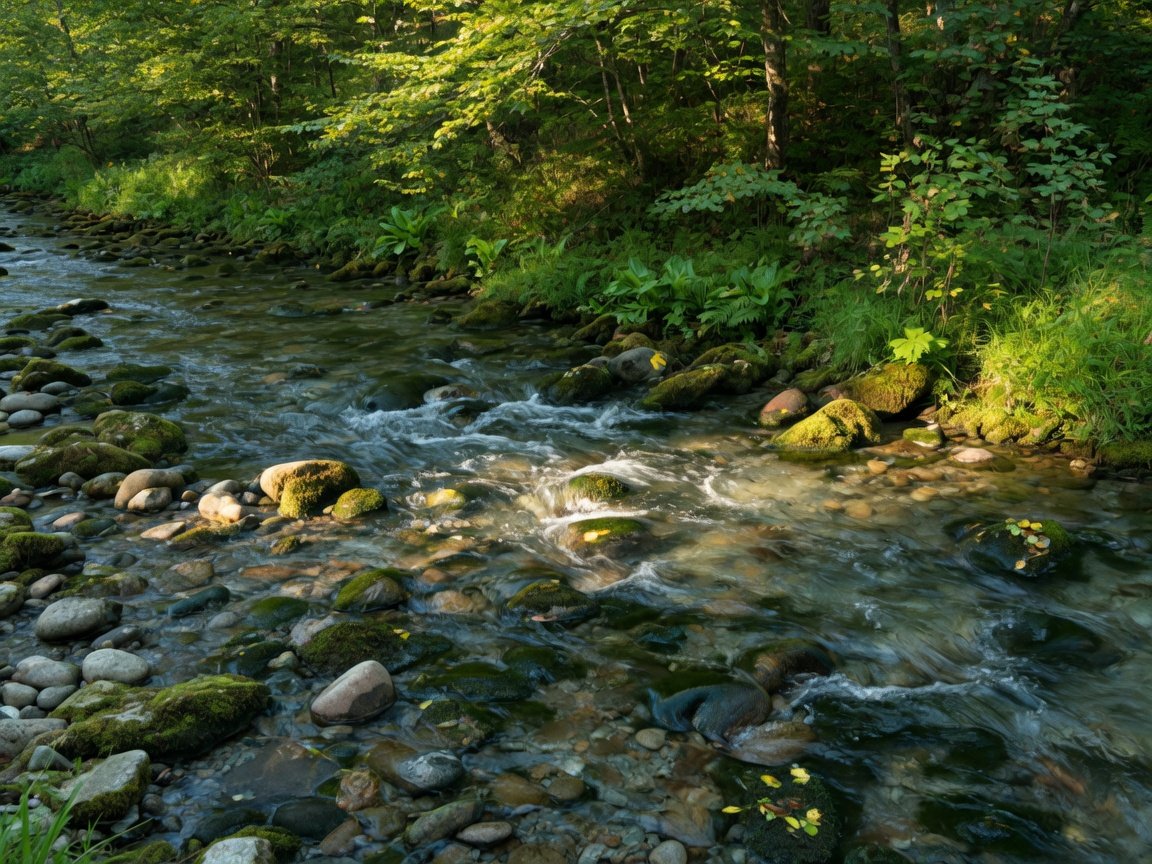
Larvae prefer fresh, flowing water: rivers, streams, and fast-moving creeks with rocky or gravelly substrates. The rocks serve as both home and feeding ground. Occasionally, larvae appear in lake margins with significant wave action, where oxygen levels and substrate conditions can mimic a stream environment. Still, stagnant water — the kind you’d find in most garden ponds — isn’t suitable for water penny larvae. They need the dissolved oxygen that only aerated, moving water reliably provides.
Adult beetles occupy a completely different niche. After emerging from their aquatic pupal stage, adults live on land. They’re most often found sheltering under rocks, logs, and leaf litter close to stream edges. Being nocturnal, they do most of their moving in darkness, which is why surveys for adult water penny beetles typically use pitfall traps or night-time torchlight searches rather than daytime observation.
Temperature matters significantly. Water penny larvae are adapted to cold and cool waters and can survive winter by overwintering in the larval stage — essentially pausing development until conditions warm again in spring. This cold-water adaptation is why water pennies are more common in upland streams and northern latitudes than in warm, slow-moving lowland rivers.
How Do Water Penny Beetles Feed — and Why Does That Matter?
The feeding habits of water penny larvae sit at the heart of their ecological importance. They’re classified as “scrapers” in the functional feeding group system used by freshwater ecologists — organisms that graze on periphyton, the film of algae, bacteria, and organic matter that coats submerged surfaces.
Using the rasping structures on their legs, larvae systematically scrape algae from rocks and consume it alongside detritus — decomposing plant and animal matter mixed into the biofilm. This isn’t just feeding; it’s active ecosystem management. By controlling algae growth on rock surfaces, water pennies prevent the kind of overgrowth that reduces oxygen levels, blocks light penetration, and destabilises the food web beneath the surface.
When grazer populations decline — due to pollution, habitat loss, or physical disturbance — algae grows unchecked. That’s when waterways start showing the familiar warning signs: algal blooms that regular water testing typically identifies first. A healthy scraper population like water pennies is essentially a natural brake on that process, working every night to keep surfaces clear.
Larvae are nocturnal feeders, spending daylight hours sheltering under rocks to avoid predators — birds, fish, small mammals, and larger invertebrates all target them. At night they emerge to feed, covering surprisingly large areas of rock surface relative to their tiny size. Adult beetles, by contrast, consume very little food during their short adult lives, which are dedicated almost entirely to reproduction.
How Do Water Penny Beetles Compare to Other Freshwater Bioindicators?
Water penny beetles are one of several invertebrate groups used in freshwater bioassessment. Understanding how they compare to other common indicator taxa helps clarify where they sit in the broader picture of stream health monitoring.
| Indicator Group | Pollution Tolerance | Preferred Habitat | Field ID Difficulty | What Their Presence Signals |
|---|---|---|---|---|
| Water Penny Beetles (Psephenidae) | Very low — highly sensitive | Rocky, fast-flowing streams | Moderate (larvae very distinctive) | Strong clean-water indicator |
| Stoneflies (Plecoptera) | Very low — highly sensitive | Cold, well-oxygenated streams | Moderate | Classic clean-water signal |
| Mayflies (Ephemeroptera) | Low to moderate | Wide range of flowing waters | Variable by species | Generally healthy conditions |
| Caddisflies (Trichoptera) | Low to moderate | Streams and rivers | Moderate (case-builders distinctive) | Generally healthy conditions |
| Chironomid Midges | High — pollution tolerant | Wide range, including still water | Difficult at genus level | Signals degraded conditions when dominant |
| Tubifex Worms | Very high — tolerant | Silty, oxygen-poor water | Easy | Signals severe pollution |
Water penny beetles occupy the “gold standard” end of the sensitivity spectrum alongside stoneflies. Their presence is one of the strongest positive biological signals a stream can give you. Their absence from a waterway where they should logically occur is equally informative — a red flag worth investigating further. Taken together with chemical test results, bioindicator data like this gives you a much more complete picture than either approach delivers alone.
What Is the Complete Life Cycle of a Water Penny Beetle?
The water penny beetle undergoes complete metamorphosis (holometabolism), moving through four distinct stages: egg, larva, pupa, and adult. Each stage serves a different ecological function, and understanding the full cycle explains why populations can be fragile when environmental conditions shift.
Stage 1 — Eggs: Female beetles lay eggs underwater or on surfaces just above the waterline. Eggs are deposited in clutches, typically tucked into rock crevices or on the undersides of stones where current and predation risk are both reduced.
Stage 2 — Larvae (the water penny stage): Larvae hatch and immediately begin aquatic life, clinging to rocks and feeding on algae. This stage lasts from several months to over a year and includes two recognisable growth instars. In colder regions, larvae overwinter — entering a near-dormancy state until spring conditions return — which means a single individual can spend more than one winter in the water before pupating.
Stage 3 — Pupa: When ready to transform, most larvae leave the water and pupate in damp soil along the stream bank. Some pupate in the water itself. The pupal period lasts approximately 10 to 30 days, during which the organism restructures from an aquatic larva into a terrestrial adult.
Stage 4 — Adult: Adults emerge in warmer months with one primary objective: reproduction. They live briefly — long enough to mate and lay the next generation of eggs — consuming minimal food throughout. Once eggs are laid, the cycle begins again.
This seasonally-driven cycle means that disruptions at any stage — destruction of riparian vegetation, changes in water chemistry, drought reducing stream flow — can knock a local population back significantly. Consistent water quality monitoring is one of the most practical tools for catching those changes before they tip into a population collapse.
Are Water Penny Beetles Dangerous? How Do They Defend Themselves?
Water penny beetles are completely harmless to humans. They are not venomous, produce no defensive chemicals, and do not bite. If you pick up a water penny larva during a stream survey, the most dramatic thing that will happen is that it tries very hard to suction onto your finger.
Their defence mechanisms are passive rather than aggressive. Larvae, when threatened, do one of two things: grip the rock surface even more tightly using their suction structures — making themselves almost impossible to dislodge — or release their grip and swim rapidly into the current. Their flat body shape also helps; it minimises the target profile that a fish or bird can lock onto, making them harder to pick off than rounder-bodied invertebrates of similar size.
Adult beetles rely on speed and concealment. On land they walk quickly and can fly when necessary. Darkness provides an additional layer of protection. They have no venom, no sting, and no defensive secretion — their best defence is simply not being seen. If you encounter water penny larvae while handling streambed stones during a survey, observe them, count them, and return the stone carefully to its original position. Minimising disturbance keeps the population intact and your survey data accurate.
What Threatens Water Penny Beetle Populations?
Because water penny beetles are so sensitive to water quality, the list of threats they face reads like a checklist of the most common freshwater stressors. Approximately one-third of freshwater fish species globally are currently considered at risk of extinction — a figure that reflects pressures affecting the entire freshwater invertebrate community, water pennies included. Knowing what harms them is the first step toward protecting them.
Water pollution: Agricultural runoff containing fertilisers and pesticides, urban stormwater, and sewage discharges all degrade water quality rapidly. Nutrient loading from fertilisers drives algal blooms that deplete oxygen levels — the exact opposite of what water penny larvae need. Identifying these problems early matters; knowing how to detect harmful contaminants before they reach damaging concentrations is a skill every freshwater steward should develop.
Physical habitat destruction: Channelisation (straightening streams), removal of streambed cobbles and boulders, and bank erosion all reduce the rocky substrate that water penny larvae depend on. A stream converted to a featureless ditch — even with clean water chemistry — can no longer support a healthy water penny population.
Riparian vegetation loss: Streamside trees and shrubs shade the water, stabilise banks, and provide the leaf litter that forms part of the detrital food base water pennies consume. Removing riparian vegetation raises water temperatures, accelerates erosion, and reduces the organic input that supports the entire invertebrate community above and below the surface.
Sedimentation: Fine sediment washing into streams from construction sites, bare agricultural fields, or overgrazed banks smothers rocky substrate. When spaces between cobbles fill with silt, water pennies lose both their attachment surfaces and their egg-laying sites. Sedimentation is one of the most widespread — and underappreciated — threats to stream invertebrate communities worldwide.
Climate change: Rising water temperatures are a long-term threat. Water penny beetles evolved for cool, well-oxygenated water. As stream temperatures increase with changing climate patterns, the thermal window suitable for these beetles narrows. Upland and mountain populations — already geographically isolated — may face the greatest pressure as cold-water refugia shrink over coming decades.
How Can You Protect Water Penny Beetle Habitats? 6 Practical Steps
The good news is that most actions that benefit water penny beetles benefit every other creature in a freshwater ecosystem. This isn’t niche conservation — it’s good watershed management. Here’s a practical, prioritised approach you can act on today:
- Test your water regularly. You can’t manage what you don’t measure. Combine chemical water testing with biological observation — look for sensitive taxa like water pennies as biological confirmation of what your test results are showing you.
- Protect and restore riparian vegetation. Plant native trees and shrubs along stream banks. Even a 5-metre buffer strip of native vegetation dramatically reduces bank erosion, keeps water temperatures down, and provides the organic leaf litter that invertebrates rely on year-round.
- Reduce nutrient inputs. Avoid using chemical fertilisers close to watercourses. If you farm or garden near a stream, switch to slow-release organic fertilisers and maintain ungrazed buffer strips between fields and the water’s edge.
- Minimise physical disturbance. If work in or near a stream is necessary, schedule it in autumn or early winter when larvae are least active. Always replace disturbed rocks to their original position and avoid disturbing large areas of streambed at once.
- Control invasive species. Invasive riparian plants like Japanese knotweed and Himalayan balsam destabilise banks and outcompete native vegetation, increasing erosion and sedimentation. Removing them consistently is one of the highest-impact actions a stream steward can take.
- Report pollution incidents without delay. If you notice a sudden fish kill, unusual foam, discoloured water, or a strong chemical smell from a watercourse, contact your regional environment agency immediately. Early response to pollution events significantly limits damage to invertebrate populations.
For a practical framework to address the water chemistry issues that directly affect water penny habitats, this guide to common water quality problems covers the most frequent issues freshwater stewards face and how to tackle them systematically before they cascade into habitat loss.
Frequently Asked Questions About Water Penny Beetles
Are water penny beetles harmful to humans?
Not at all. Water penny beetles are completely harmless. They are not venomous, produce no defensive chemicals, and do not bite. Larvae either grip tighter to their rock or swim away when disturbed; adults simply walk or fly off. You can safely handle them during stream surveys — just return everything carefully to where you found it and minimise the time the stone is out of the water.
What does finding a water penny beetle mean for my stream or pond?
It’s a genuinely good sign. Water penny beetle larvae only tolerate clean, well-oxygenated water. Finding them tells you that your waterway has passed a high biological quality threshold — one that chemical tests alone can’t fully capture. Treat their presence as a green flag for ecosystem health and a reminder to keep protecting whatever is making that possible.
How long does a water penny beetle live?
The larval stage is the long one — several months to over a year, with larvae in cold climates overwintering and pausing development until spring. The pupal stage runs approximately 10 to 30 days. The adult stage is brief in comparison. The majority of a water penny beetle’s existence is spent as a larva underwater, which is where almost all of its ecological work gets done.
What do water penny beetles eat?
Larvae are grazers — they scrape algae off rock surfaces using rasping structures on their legs and consume detritus alongside it. This keeps algae from overgrowing rock surfaces and contributes to nutrient cycling throughout the stream. Adult beetles are thought to consume minimal food, their brief adult lives focused almost entirely on reproduction rather than feeding.
Where can I find water penny beetles?
Your best bet is clean, rocky, fast-flowing streams — look in the riffle zones, the shallow bubbly stretches with exposed flat stones. Carefully flip a rock, wait a moment for any dislodged larvae to settle, then scan the surface before the current carries them away. You’re looking for flat, copper-brown ovals roughly the size of a small fingernail. Always replace the stone face-down, gently, to avoid crushing anything underneath.
Can water penny beetles survive in a garden pond?
Larvae need the dissolved oxygen and moving water of a stream or river — a still garden pond won’t support their development. Adult beetles might occasionally visit a well-oxygenated wildlife pond, but for larvae to thrive you’d need flowing water over rocky substrate. Adding a pump-driven stream channel or waterfall feature over stones can create marginal conditions more attractive to stream invertebrates broadly.
Why are water penny beetles called “water pennies”?
The name comes straight from the larva’s appearance: flat, round, and copper-brown — like a small old penny coin pressed hard against a rock. It’s one of those common names so accurate that you almost don’t need a photograph to picture the creature. Once you’ve seen one, you won’t mistake it for anything else.
Final Thoughts: Small Beetle, Big Impact
Water penny beetles punch well above their weight in freshwater ecosystem terms. A 5 mm larva clinging to a streambed stone is simultaneously feeding, cleaning, and reporting on the health of the water around it. That’s a remarkable amount of ecological work for something most people walk past without a second glance.
The practical message is clear. If water penny larvae are present in your stream, protect what makes that possible — clean water, rocky substrate, riparian vegetation, and low nutrient inputs. If they’re absent from a waterway where you’d expect them, that absence is information worth acting on promptly.
For a deeper look at the biology and ecology behind these remarkable creatures, this complete guide to water penny beetle biology is worth reading alongside your monitoring records. Water penny beetles have been cleaning freshwater for millions of years. With informed, consistent stewardship, they’ll keep doing it — but only if we pay attention to what their presence, and their absence, is trying to tell us.
—