I’ve spent years maintaining small ponds in my backyard, and I’ve learned that the right plants can make all the difference between constant work and easy enjoyment. If you’re looking to create a beautiful water feature without the headache of weekly maintenance, you’ll want to choose plants that practically take care of themselves. Let me share my top five picks that have survived and thrived in my ponds while I’ve barely lifted a finger to help them along.
Some of the links in this article may be affiliate links. If you make a purchase through these links, we may earn a small commission at no extra cost to you. Thank you.
6Pcs Artificial Lily Pads for Pond Decoration (3 Sizes)
No products found.
Looking for a low-maintenance option for your small pond? I’ve found these Abeillo artificial lily pads to be a game-changer. The 6-piece set comes in three different sizes (10cm, 12.9cm, and 14cm), creating a natural-looking arrangement that floats beautifully on water.
I love that they’re made from durable EVA plastic that’s completely UV resistant. Unlike real plants, these won’t die off or need trimming. My fish appreciate the shade they provide, and I don’t have to worry about them disintegrating—they’ve lasted over a month in my outdoor pond without fading noticeably. They’re perfect for year-round decoration when live plants might struggle.
Best For: Home gardeners with small to medium water features who want low-maintenance, realistic-looking lily pads that provide shade for fish and year-round decoration without the upkeep of live aquatic plants.
Pros:
- Made of durable, UV-resistant EVA plastic that floats long-term without disintegrating, lasting at least a month in outdoor conditions
- Comes in three different sizes (10cm, 12.9cm, and 14cm) to create a natural-looking arrangement in ponds or water features
- Provides beneficial shade for fish while requiring zero maintenance compared to live aquatic plants
Cons:
- Some customers report fading when exposed to direct sunlight for extended periods
- At 0.03 kilograms, they may be too lightweight and could blow away in windy conditions
- Limited size range (10-14cm diameter) may be too small for larger ponds or water features
Lily Pad for Ponds, Artificial Floating Lotus (9 PCS)
No products found.
When real aquatic plants aren’t practical for your small pond, these artificial floating lotuses offer a hassle-free alternative. I’ve found these foam lotus pads to be remarkably realistic from a distance, easily supporting the weight of frogs and small turtles just like natural lily pads would.
What I love most is their maintenance-free nature – no fertilizing, no pump-clogging roots, and no concerns about fish nibbling them away. They’ll maintain about 60% of their color through summer sun exposure, though I’d recommend flattening them with a hairdryer before placing them. For under $20, they’re an instant pond beautification solution while you’re waiting for live plants to establish themselves.
Best For: Pond owners seeking an immediate, low-maintenance aesthetic solution while waiting for live aquatic plants to establish or those with small water features where real plants aren’t practical.
Pros:
- Supports the weight of small wildlife like frogs and turtles while providing them with basking spots
- Requires zero maintenance with no fertilizing, pump-clogging roots, or fish damage concerns
- Creates instant visual appeal for ponds, pools, and water features with realistic appearance from a distance
Cons:
- Appears artificial upon close inspection, potentially detracting from a natural pond aesthetic
- Color fades to approximately 60% of original vibrancy after exposure to summer sun
- Tends to collect dirt and debris over time, requiring occasional cleaning or replacement
Artificial Lily Pads & Floating Lotus Flowers for Ponds (14 PCS)
No products found.
For pond owners who don’t have the time or proper conditions for real aquatic plants, artificial lily pads and lotus flowers offer a maintenance-free alternative. I’ve found this 14-piece set from WhistenFla provides a realistic touch with five colors of lotus flowers and three sizes of leaves.
What I love about these foam decorations is how they float naturally on water while resisting fading from sun and chlorine. They’re perfect for small ponds, attracting wildlife like frogs and providing shade for fish. If yours arrive flattened, just use a hair dryer or place them under books to restore their shape.
While not perfectly realistic, they’ll brighten your pond with minimal effort – no watering, no dying!
Best For: Pond owners seeking low-maintenance decoration that provides aesthetic appeal and practical benefits like shade for fish without the care requirements of real aquatic plants.
Pros:
- Durable foam construction resists fading from sun and chlorine exposure, making them suitable for outdoor use in various weather conditions
- Variety of colors (ivory, pink, rose, purple, orange) and sizes (11 inches and 6 inches) creates a natural-looking pond display
- Attracts wildlife like frogs and koi fish while providing practical shade for pond creatures
Cons:
- May arrive flattened from packaging and require restoration with a hair dryer or heavy books
- Some customers report the products look cheap or flimsy compared to real plants
- Multiple packages may be needed for adequate coverage in larger ponds or water features
9pcs Artificial Floating Foam Lotus Flowers with Lotus Leaves for Pool Decoration
No products found.
These artificial floating lotus flowers offer a perfect solution if you’re struggling with growing real aquatic plants in your small pond. The 9-piece set includes 3 white foam lotus flowers and 6 leaves in various sizes, creating a natural-looking arrangement.
I’ve found they work beautifully in garden ponds, birdbaths, and even swimming pools. They’re lightweight yet sturdy, and won’t fade much in sunlight. Each flower has convenient hooks so you can attach string or weights if needed.
If they arrive slightly misshapen, just soak them in warm water (40-60 degrees) to restore their form. They’ll give you the serene look of lotus flowers without any of the maintenance!
Best For: People who want the aesthetic of water lilies in their ponds, pools, or water features without the maintenance of live aquatic plants.
Pros:
- Set includes variety of sizes (3 flowers and 6 leaves in 3 different diameters) for natural arrangement
- Lightweight foam construction allows for easy floating and includes hooks for optional anchoring
- Durable for outdoor use with minimal fading in sunlight
Cons:
- Some customers find the white color unrealistic compared to natural lotus flowers
- May arrive deformed from shipping and require warm water treatment to reshape
- Relatively small size (largest leaf is 7.1 inches) may not provide significant coverage for larger ponds
18PCS Artificial Lily Pads Floating Flowers for Ponds and Pools
No products found.
Looking for an easy way to enhance your small pond without the maintenance of real plants? I’ve found RAINFLOW’s 18PCS Artificial Lily Pads set to be a perfect solution. These realistic foam lily pads come in three different sizes (3.9″, 5.9″, and 7.8″), creating a natural-looking arrangement that floats effortlessly on water.
Made from water-resistant EVA foam, they’re lightweight enough to move with gentle water currents while providing shade for fish. I love how they look year-round with zero upkeep. At just $6.99, they’re an affordable way to add visual interest to small ponds, pools, or even indoor water features. They’re also great for crafts or creating charming mermaid scenes!
Best For: Small pond owners seeking low-maintenance decoration that provides fish shade while adding visual interest without the hassle of maintaining live aquatic plants.
Pros:
- Comes in three different sizes (3.9″, 5.9″, and 7.8″) for creating natural-looking arrangements
- Made of water-resistant EVA foam that’s durable in outdoor conditions and requires zero maintenance
- Versatile for multiple uses including pond decoration, fish habitat, and craft projects
Cons:
- Bright green color may appear less realistic than natural lily pads
- Lightweight design means they may move around too much in windy conditions
- Some manual measurement deviations possible in the manufacturing process
Factors to Consider When Choosing Plants for Small Pond
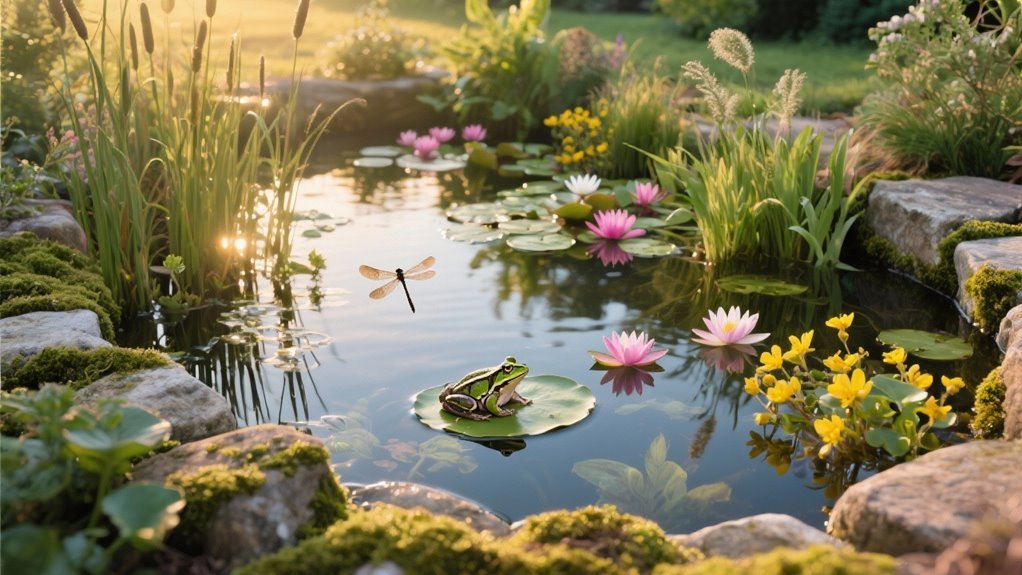
When I’m picking plants for my small pond, I need to evaluate critical factors that’ll guarantee they thrive in my specific environment. I always check the pond’s size limitations, required water depths, and how much sunlight the area receives before making any purchases. The plant’s growth rate and how much maintenance I’m willing to commit to are equally important considerations that’ll save me headaches down the road.
Pond Size Restrictions
Why does size matter so much when selecting plants for your small pond? It’s all about balance and scale. I’ve found that in ponds smaller than 10 square meters, you’ll need compact plants that won’t take over the limited space or block water movement.
If your pond is shallow (less than 1 meter deep), I recommend sticking with floating or shallow-rooted varieties. Deep-rooted species simply won’t have enough room to thrive.
For tiny ponds under 500 gallons, I always suggest keeping plant coverage to just 10-20% of the surface. This prevents oxygen depletion while maintaining water quality.
In narrow ponds (less than 2 meters wide), choose smaller-leaved plants to guarantee sunlight reaches all areas. And whatever you do, avoid aggressive growers – they’ll quickly dominate your small ecosystem.
Water Depth Requirements
Beyond pond size, water depth plays a major role in plant selection for your small pond. Different plants have specific depth requirements to thrive, and I’ve found matching these needs is essential for success.
Marginal plants need shallow water (0-6 inches) and work perfectly along edges. If you’re adding water lilies, they’ll need deeper areas of 1-4 feet to spread their beautiful leaves across the surface. I always include some submerged plants, which require 1-10 feet of water to properly photosynthesize and add essential oxygen.
For effective oxygenation, make sure your pond has sections at least 2 feet deep. Remember, if you place plants in water that’s too deep for their species, they’ll struggle with nutrient absorption and may eventually die. I always measure my pond’s deepest point before selecting plants.
Sunlight Exposure Needs
How much sun hits your pond area directly impacts which plants will thrive in your small water garden. I’ve found that full-sun varieties need at least 6 hours of direct sunlight daily to properly photosynthesize and develop strong foliage. If your pond gets intense afternoon rays, partial-shade plants might be your better option, as they only require 3-6 hours of sunlight and won’t suffer from leaf scorch.
Remember that sunlight doesn’t just affect the plants—it also warms your pond water. Plants in sunny spots can raise water temperatures by several degrees, which affects fish and other aquatic creatures. I always recommend choosing plants that match your specific light conditions. The right choices will provide appropriate shade, reduce water evaporation, and protect your pond ecosystem from excessive UV exposure.
Growth Rate Concerns
While sunlight plays a key role in pond health, the growth rate of your chosen plants can make or break your small water garden. I’ve learned that aggressive growers like water hyacinth can double their size every 6-12 days, quickly overwhelming a modest pond.
For ponds under 500 gallons, I recommend avoiding fast-spreading species like duckweed, which can carpet your entire surface within two weeks. This dense coverage blocks sunlight and reduces oxygen for your fish. Instead, I opt for slower-growing varieties that expand less than 12 inches annually, requiring less maintenance while maintaining ecological balance.
Remember that growth rates aren’t fixed—they’ll accelerate by 20-30% in warmer, sunnier conditions. Plants that increase by more than 50% monthly can deplete nutrients and trigger algae blooms, compromising water quality. Your small pond will thrive with moderate growers that provide beauty without the constant pruning.
Maintenance Level Assessment
The maintenance level of your pond plants can make the difference between a relaxing water feature and a weekend-consuming chore. I’ve found that evaluating maintenance needs before adding plants saves countless hours of work later.
Fast-growing species like water hyacinth might need weekly attention to prevent takeover, while native submerged plants often require just an annual check. I recommend considering water depth and sunlight in your selection – floating plants typically need monthly debris clearing to keep water surfaces clean.
I’ve had great success with plants that adapt to varying nutrient levels, as they reduce the need for water testing to just seasonal checks. For my small pond, I prioritize naturally pest-resistant species, which has eliminated my need for chemicals. Regular monitoring is still important, but the right choices dramatically reduce your workload.
Fish Compatibility Issues
Beyond maintenance considerations, I’ve learned that fish and plants don’t always make perfect pond partners. If you’re keeping goldfish or tilapia, be careful with soft-leaved plants – these fish might turn your carefully selected greenery into lunch!
Plants with extensive root systems can compete with your fish for oxygen, especially in poorly circulated ponds, potentially leaving your finned friends gasping. Some plants even release chemicals that harm sensitive fish species, affecting their gills and increasing stress levels.
Watch out for fast-growing varieties too. When they die back, they can fuel algae blooms that reduce visibility and oxygen levels. For harmony in your pond ecosystem, I recommend matching plant selections to your fish’s preferred water temperature and pH. This simple step prevents imbalances that could lead to fish diseases or plant die-off, keeping your miniature water garden thriving.
Climate Zone Adaptation
How dramatically different your pond plants will perform depending on where you live! Success starts with selecting plants that match your USDA hardiness zone, which is based on your area’s minimum winter temperatures.
If you’re lucky enough to garden in warmer zones (9-13), you can enjoy tropical water lilies that bloom year-round with minimal worry about frost damage. For those of us in colder regions (zones 3-6), I recommend hardy species with protective rhizomes that simply go dormant when temperatures drop.
Living in a dry climate? Look for water plants with thick leaves that conserve moisture despite high evaporation rates. And don’t forget to keep in mind your growing season length—temperate areas might offer only 150-200 growing days, while subtropical gardeners enjoy over 300 days to let their aquatic plants flourish!
Conclusion
I’ve discovered that artificial options aren’t just convenient—they’re game-changers for small pond owners. My theory that fake plants could provide the same visual appeal as real ones proved true when I installed EVA lily pads in my backyard pond. They’ve lasted through seasons without fading or maintenance. Whether you choose foam lotus flowers or artificial lily pads, you’ll enjoy a beautiful water feature without the constant upkeep real plants demand.