
How to Get Rid of Phragmites in Ponds: Effective Methods That Actually Work in 2026
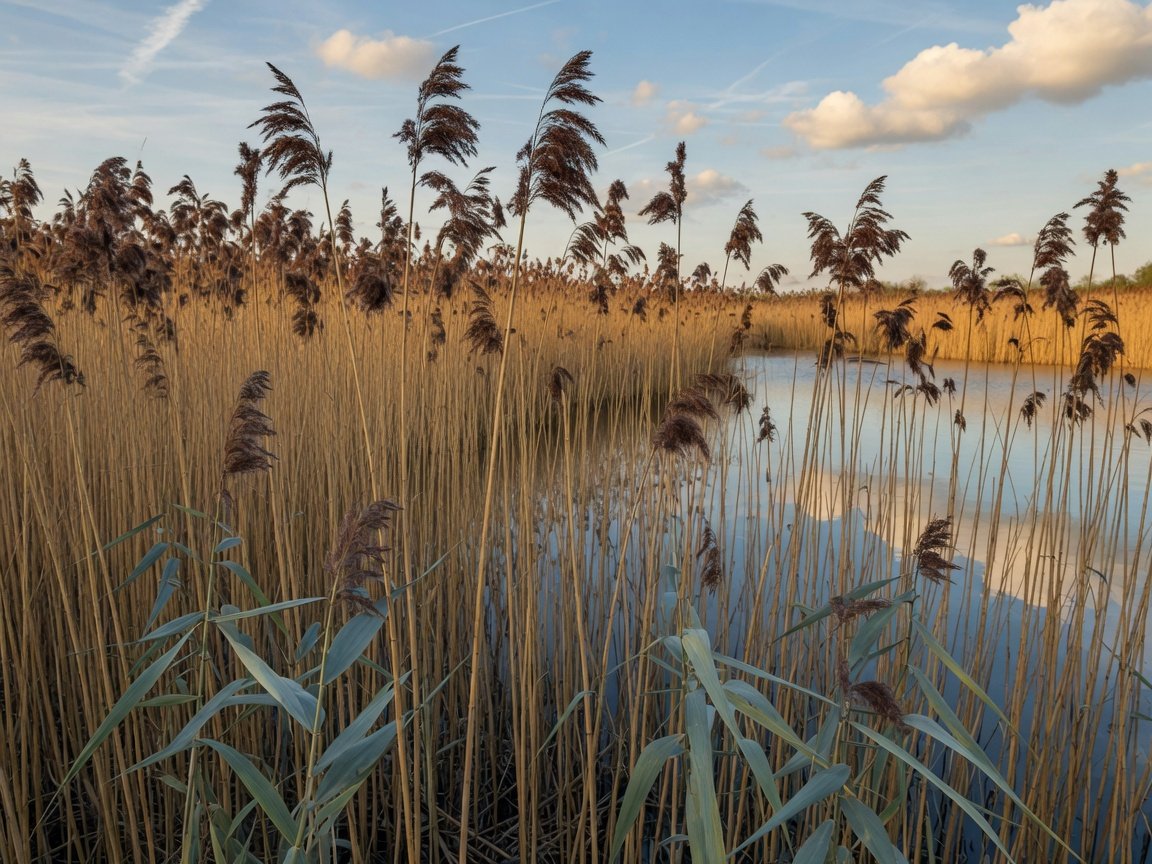
Phragmites — the towering, feathery-topped reed colonising your pond margins — is one of the most aggressive invasive plants in North America, and getting rid of it takes more than pulling a few stalks. The most effective approach combines mechanical removal or burning of above-ground growth with a precisely timed herbicide application, followed by consistent monitoring for at least three to five years.
Some of the links in this article may be affiliate links. If you make a purchase through these links, we may earn a small commission at no extra cost to you. Thank you.
What You Need to Know Before You Start
- Phragmites spreads via underground rhizomes that extend up to 15 feet per year — cutting alone will not kill it.
- Late-summer herbicide treatment (August through September) delivers the highest kill rates because the plant is actively transporting nutrients down to its roots at that time.
- Combining methods works best: wetland management research indicates that cutting followed by herbicide treatment achieves over 90% control rates, compared with roughly 60–70% for herbicide alone.
- Long-term commitment is essential — native plant recovery typically takes three to five years after a successful removal programme.
What Exactly Is Phragmites and Why Is It So Hard to Kill?
Phragmites australis — commonly called the common reed — is a tall perennial grass that thrives in wet, disturbed areas including pond margins, ditches, and shorelines. The invasive European subspecies (Phragmites australis subsp. australis) arrived in North America in the early 1800s and has since muscled out native wetland species across the continent. A native subspecies (Phragmites australis subsp. americanus) does exist and is far less aggressive, so correct identification matters before you start any control programme.
What makes invasive phragmites so tenacious is its underground root network. Rhizomes can extend deep into pond sediment and spread laterally in every direction. Even if you remove every visible stalk, any surviving rhizome fragment can regenerate an entirely new stand. Research on invasive plant allelopathy shows that phragmites releases chemicals into the soil that actively suppress competing native plants — reducing native plant diversity by up to 75% in heavily invaded areas. That’s why complete rhizome elimination, not just top-kill, has to be the goal.
How Do You Know Phragmites Is Becoming a Serious Problem?
Phragmites doesn’t announce itself — it quietly expands around your pond edges until one season you realise the reeds are 15 to 20 feet tall and blocking your waterway entirely. The early warning signs are worth knowing so you can act before the infestation becomes overwhelming.
Watch for dense stands of tall reeds with feathery purple-brown plumes appearing in late summer. You’ll also notice that native plants — cattails, bulrushes, sedges — start disappearing from areas where phragmites takes hold. If waterfowl habitat around your pond is shrinking, or fish access to shallow water is being blocked by a wall of stems, phragmites is very likely the culprit. Wetland ecologists note that by the time a stand is clearly visible from a distance, it has already established a substantial underground rhizome network — making early action critical.
If you have other invasive pond plants competing for space, tackling phragmites often goes hand-in-hand with broader weed management. Our guide on managing pond weeds effectively covers the wider picture if you’re facing multiple invaders at once.
Does Cutting Phragmites Actually Work?
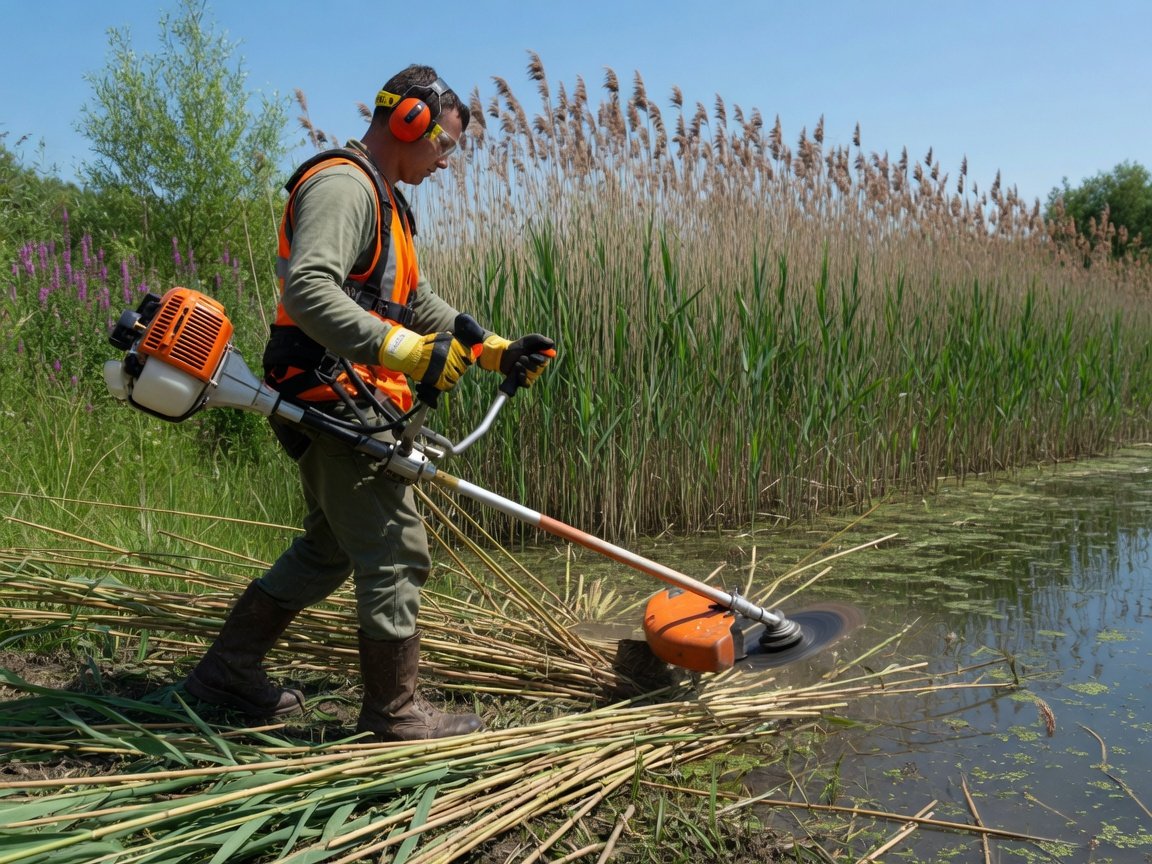
Cutting is one of the most accessible control methods, but it comes with a critical caveat: on its own, it rarely kills phragmites. What cutting does is weaken the plant over time, prevent seed dispersal, and make the stand more accessible for the follow-up herbicide treatment that actually finishes the job.
For the best results, cut phragmites as low to the ground as possible — ideally at or below the waterline if your pond margin allows. A heavy-duty string trimmer, brush cutter, or flail mower works well for large stands. Timing matters here too: cutting in early summer, before seed heads form, prevents the plant from spreading further via seed. Then cut again in late summer, just before your herbicide application window opens, so you’re treating fresh, actively growing regrowth.
Dr. Sarah Mitchell, a wetland ecologist specialising in invasive plant management, puts it plainly: “Cutting alone is a holding strategy. It slows the spread and keeps the stand manageable, but you need to pair it with herbicide or repeated flooding to actually kill the rhizomes. Cutting without a follow-up plan just exhausts you, not the plant.”
Keep your cutting equipment clean between sessions. Rhizome fragments clinging to blades or wheels can spread the infestation to unaffected areas of your pond margin — a small but very real risk that’s easy to overlook.
Should You Use Herbicides to Kill Phragmites?
For most pond owners dealing with an established infestation, herbicide treatment is the single most effective tool available. The active ingredients used for phragmites control are primarily glyphosate and imazapyr — both systemic herbicides that travel through the plant’s vascular system down into the rhizomes, killing the root network rather than just the visible shoots.
Glyphosate-based products formulated specifically for aquatic use are the most widely used option. They are labelled for use around water, break down relatively quickly in the environment, and are familiar to most applicators. Imazapyr is more persistent in the soil and highly effective, but it can affect non-target plants more broadly — so it requires more precise application. Never use standard agricultural herbicides near pond water. Always select products with an aquatic-use label and follow the label to the letter, including any required buffer distances from open water.
Mark Thompson, an invasive species coordinator with over 15 years of field experience in wetland restoration, recommends a specific window: “Apply herbicide to actively growing phragmites in late August or September. The plant is pushing energy down to its roots at that point, so the herbicide rides along with those carbohydrates straight into the rhizome network. Treat in spring or early summer and you’ll kill the leaves, but the rhizomes survive and rebound fast.”
Phragmites shares many biological traits with other tough emergent plants. If you’ve dealt with removing cattails from your pond, the late-summer herbicide timing principle applies to both — the seasonal window is similarly critical for cattail control.
Can Prescribed Burning Help Control Phragmites?
Prescribed burning is a legitimate support tool in phragmites management — but it works as a preparatory technique rather than a standalone solution. Fire effectively removes the dense above-ground litter that phragmites builds up year after year, opens the site for follow-up herbicide treatment, and allows light to reach the soil surface, which helps native plants re-establish once phragmites is brought under control.
The most effective burn timing is late winter or very early spring, before new growth emerges. At this point, the standing dead stems are dry and burn cleanly, and the risk of igniting green vegetation is minimal. After the burn, the cleared, blackened ground is ideal for herbicide application to any regrowth that emerges in spring. The combination of burn-then-spray is a well-established protocol in larger wetland restoration programmes.
Before planning any burn, check your local regulations carefully. Most jurisdictions require a burn permit, advance notice to neighbours, and a cleared fire break around the perimeter. In some areas — particularly near residential properties or during elevated fire-risk periods — burning may be prohibited entirely. Never burn alone. And make sure that smoke and ash runoff won’t compromise your pond water quality for fish and amphibians. Burning is best viewed as a site-preparation step rather than a primary control method.
What About Physically Digging Out Phragmites?
Physical removal — digging, spading, or excavating the root mass — is the most labour-intensive approach and the one most likely to frustrate you if you underestimate the rhizome network. That said, in small, contained infestations (a patch of a few square feet of pond margin, for example), physical removal can be entirely effective if done thoroughly.
The goal is to remove every fragment of rhizome from the substrate. Phragmites rhizomes are tough, thick, and often straw-coloured, running both horizontally and vertically through the sediment. Work in sandy or loose soil conditions where possible — heavy clay makes complete removal extremely difficult. Dispose of all plant material well away from any water body; even detached rhizome fragments can re-root if they reach wet ground.
Repeated flooding — where pond water levels can be raised and held — is another physical control option worth considering. Keeping rhizomes submerged for an extended period (several weeks to months) can stress and eventually kill them. This approach requires precise water control and isn’t always practical for private ponds, but it’s worth discussing with a specialist if your pond infrastructure supports it.
When Is the Best Time of Year to Treat Phragmites?
Timing is arguably the single most important variable in phragmites control. Treat at the wrong time of year and you’ll spend money and effort with minimal lasting results. Treat at the right time and a single well-executed application can knock back even a large stand dramatically.
Late summer — specifically late August through mid-September — is the optimal herbicide window for most of North America and northern Europe. At this point, phragmites is in its senescence phase, actively moving carbohydrates from its leaves down into its rhizomes to store energy for the following year. A systemic herbicide applied now travels with those carbohydrates directly into the root network, delivering a lethal dose underground where it counts.
Spring treatment can be useful for a cut-and-spray approach on early-season regrowth, but it rarely achieves the same rhizome kill rate as late-summer application. Winter treatment is effectively pointless — the plant is dormant and won’t translocate anything applied to the surface. If you’re also planning seasonal pond upkeep, you can fold your phragmites monitoring into your broader autumn pond winterisation routine — several tasks naturally overlap.
| Season | Recommended Action | Effectiveness |
|---|---|---|
| Late Winter / Early Spring | Burn standing dead material; prepare site | Moderate (preparatory only) |
| Early Summer (June–July) | First cut to prevent seed spread | Low alone; High as herbicide prep |
| Late Summer (Aug–Sept) | Herbicide application to active regrowth | Highest |
| Autumn (Oct–Nov) | Remove dead material; plant native species | Moderate (follow-up) |
| Winter | Planning and monitoring only | N/A |
What Does an Effective Phragmites Removal Programme Look Like?
Successful phragmites control isn’t a single event — it’s a multi-year programme. Here’s a realistic, step-by-step sequence that pond owners and land managers are using in 2026:
- Identify and map the infestation (Spring, Year 1). Walk the entire pond margin and mark the extent of phragmites growth. Note any native plants nearby that need protection during treatment.
- Cut to ground level (Early Summer, Year 1). Use a brush cutter or heavy-duty trimmer to cut all stems as low as possible before seed heads form. Collect and dispose of cuttings well away from water.
- Apply aquatic-approved herbicide (Late August–September, Year 1). Treat actively growing regrowth with a glyphosate or imazapyr product labelled for aquatic use. Follow label instructions exactly, including any required buffer distances from open water.
- Burn or remove dead material (Late Winter/Early Spring, Year 2). If permitted, burn standing dead stems. If burning is not an option, cut and mechanically remove dead material to open the site for native plant recovery.
- Monitor and spot-treat (Spring through Autumn, Year 2 and beyond). Check for regrowth every six to eight weeks. Treat any surviving or resprouting plants immediately — don’t allow new growth to become established.
- Introduce native plantings (Year 2–3). Once phragmites density is significantly reduced, plant native wetland species — bulrush, native sedges, blue flag iris — to outcompete any remaining phragmites and stabilise the bank.
- Continue monitoring for five years. Rhizomes can remain viable underground long after above-ground plants appear dead. Annual monitoring and immediate spot-treatment of any regrowth is essential for lasting success.
Should You DIY Phragmites Control or Hire a Professional?
For small infestations covering less than a quarter-acre of pond margin, most committed pond owners can manage phragmites control themselves with the right equipment and a consistent multi-year approach. For larger stands — or where herbicide use near sensitive water bodies requires special permits — professional contractors who specialise in aquatic invasive species management are well worth the cost.
Dr. James Chen, an aquatic botanist who consults on large-scale wetland restoration projects, notes that DIY programmes fail most often not because of wrong methods but because of wrong timing and inconsistency: “Homeowners treat once, see good results in year one, and stop. By year three the stand has recovered fully. A professional brings a multi-year contract and accountability — that continuity is where the real value lies.”
A useful benchmark from a real-world five-year programme: a Michigan landowner with a 2-acre retention pond reduced phragmites coverage from 40% of the shoreline to under 2% through a contractor-led programme combining late-summer herbicide and annual monitoring. The cost was approximately $1,200 in Year 1 and under $300 per year for monitoring and spot treatment thereafter. Native plant diversity in the treated areas increased by an estimated 60% by year five — a measurable, lasting result that justified the investment.
When hiring a contractor, ask specifically about their experience with aquatic herbicide applications, their licensing for near-water pesticide use, and what monitoring plan they include after initial treatment. Get references from pond owners or land managers who hired them for phragmites specifically — general landscaping experience is not a substitute for invasive species expertise.
Phragmites is sometimes confused with giant reed (Arundo donax), particularly in warmer southern climates. If you’re unsure which plant you’re dealing with, the guide to getting rid of giant reed grass covers the key differences and how control strategies differ between the two species.
How Do You Stop Phragmites From Coming Back?
Prevention and aftercare are where most phragmites control programmes succeed or fall apart. The plant is remarkably good at re-establishing from wind-blown seeds from neighbouring properties or from rhizome fragments disturbed during removal. A few targeted steps dramatically reduce re-invasion risk.
First, establish a dense stand of native wetland plants in the treated area as quickly as possible. Native species like blue flag iris, swamp milkweed, native bulrushes, and soft-stem rush compete directly with phragmites for space and light. A healthy, diverse native plant community is one of the most effective long-term barriers against re-colonisation — bare or disturbed soil after phragmites removal is an open invitation for the next generation of invasives.
Second, address the conditions that phragmites thrives in: nutrient-rich, disturbed soil. If your pond has high nutrient loading from agricultural runoff or decaying organic matter in the sediment, addressing that underlying issue makes your pond margins less hospitable to phragmites in the long run. Similarly, keeping pond grass and emergent vegetation in check along the margins reduces the disturbed-soil niches that phragmites seeds need to germinate. Our overview of controlling invasive pond grass covers the category of grass-like colonisers that compete for the same marginal habitat.
Third, inspect your pond margins each spring — ideally in April or May, when new phragmites shoots are easy to spot and the plant is still small enough to treat with minimal herbicide. A ten-minute walk around the perimeter once a month from April through September lets you catch new growth before it becomes entrenched. Small spot treatments cost a fraction of re-treating a full stand.
Frequently Asked Questions About Getting Rid of Phragmites
Can I just pull phragmites out by hand?
For very small, recently germinated seedlings, hand-pulling can work — but only if you remove the entire root system intact. In established stands, the rhizomes extend too deep and too widely for hand-pulling to be effective. You’ll exhaust yourself and the plant will regrow from whatever rhizome fragments remain in the ground. Reserve hand-pulling for fresh seedlings only.
Is phragmites removal safe for fish in my pond?
When you use herbicide products specifically labelled for aquatic use and follow the label directions — including any required re-entry intervals — your fish should not be harmed. Avoid treating during hot, still weather when dissolved oxygen in the water is already naturally low, as a large volume of decaying plant material breaking down after treatment can temporarily deplete oxygen levels. Treat in sections if you have a large stand, rather than all at once.
How quickly will phragmites die after herbicide treatment?
With a late-summer glyphosate application, you’ll typically see leaves turning yellow within two to three weeks, with full top-kill of above-ground plant material within four to six weeks. Rhizome death is slower and won’t be visible at the surface. Some root systems may still be viable underground even when the surface appears fully dead — which is why follow-up monitoring and spot-treatment in year two is almost always necessary.
Does phragmites grow back after cutting?
Yes — almost always, and often vigorously. Cutting stimulates regrowth from the base and rhizomes. This is actually useful when you’re using cutting as a preparatory step before herbicide: the fresh regrowth that emerges after a summer cut is actively growing and highly receptive to systemic herbicide uptake. Cut in early summer, then treat the resulting regrowth in late August for maximum effect.
Can phragmites spread to my pond from a neighbouring property?
Absolutely. Phragmites spreads via wind-blown seeds, water-transported rhizome fragments, and contaminated equipment. Seeds can travel hundreds of metres from a neighbouring stand. Establishing a dense native plant buffer along your pond margin is your best defence — it makes it much harder for phragmites seedlings to find the bare, disturbed soil they need to establish and grow.
What is the difference between phragmites and cattails?
Both are tall wetland plants that colonise pond margins, but they’re quite different species. Phragmites is a grass with feathery, plume-like seed heads and can reach 15–20 feet tall. Cattails are flowering plants with the unmistakable brown sausage-shaped seed heads, typically reaching 5–8 feet. Both can become invasive in ponds and both require multi-year management. If you’re dealing with cattails alongside your phragmites, the specific guide to removing cattails from your pond covers timing and herbicide selection for that species.
Do I need a permit to use herbicides near my pond?
In most US states and Canadian provinces, applying herbicide to or immediately adjacent to a water body requires using products specifically labelled for aquatic use. Some states also require advance notification to the relevant environmental agency before any aquatic herbicide application, and commercial applicators must hold a specific licence. Check your state’s Department of Natural Resources or Department of Agriculture website for current requirements before purchasing any product — regulations vary significantly by location.
Your Practical Timeline for Getting Rid of Phragmites in 2026
Getting rid of phragmites is a multi-year project, but it’s absolutely achievable if you commit to the right sequence at the right times. Here’s a clear implementation timeline to work from:
- This week: Walk your pond margin and map the phragmites extent. Confirm whether it’s the invasive or native subspecies before committing to any treatment.
- June–July: Complete your first full cut to ground level or below. Collect and dispose of all cuttings away from any water body.
- Late August–September: Apply an aquatic-approved systemic herbicide (glyphosate or imazapyr) to actively growing regrowth. This is your highest-impact treatment window — don’t miss it.
- Autumn–Winter: Plan native plant restoration for treated areas. Source native wetland plug plants or seeds for spring planting.
- Year 2 — April onwards: Begin monthly monitoring walks. Spot-treat any regrowth immediately with a small herbicide applicator. Plant native species in treated areas.
- Years 3–5: Continue annual monitoring. Spot-treat promptly. Watch native plants fill in and wildlife return to your restored pond margin.
Looking ahead to 2026 and 2027, two emerging tools are worth watching. Biological control agents — specifically insects that naturally suppress phragmites in its native European range — are advancing through regulatory approval in the US and Canada, and may offer a low-chemical-input option for large-scale management within this decade. Drone-based precision herbicide application is also becoming commercially available in several US states, allowing targeted treatment of difficult-to-access wetland areas with significantly reduced chemical volumes.
Phragmites management is ultimately about persistence. The plant is tough, but it is not unbeatable — and every year of consistent, well-timed treatment tips the odds further in your favour. Tackle it alongside any other pond health issues you’re managing — from excess organic matter to algae and competing invasive species — and your pond will reward the sustained effort with a healthier, more biodiverse margin for years to come.
—