
You can remove lily pads from a pond by pulling them out at the roots, raking them to shore, or cutting stems below the waterline. The most effective approach combines stem cutting and root extraction — skip the root removal step and lily pads will regrow within 3 to 4 weeks.
Some of the links in this article may be affiliate links. If you make a purchase through these links, we may earn a small commission at no extra cost to you. Thank you.
Key takeaways before you start:
- Hand-pulling works well for ponds under ¼ acre with moderate lily pad coverage
- Root removal is the single most important step — cutting stems alone leads to rapid regrowth
- A long-handled pond rake speeds up removal significantly on larger infestations
- Aeration, nutrient reduction, and shade management are the most effective ways to prevent lily pads from returning
Why Are Lily Pads a Problem in Backyard Ponds?
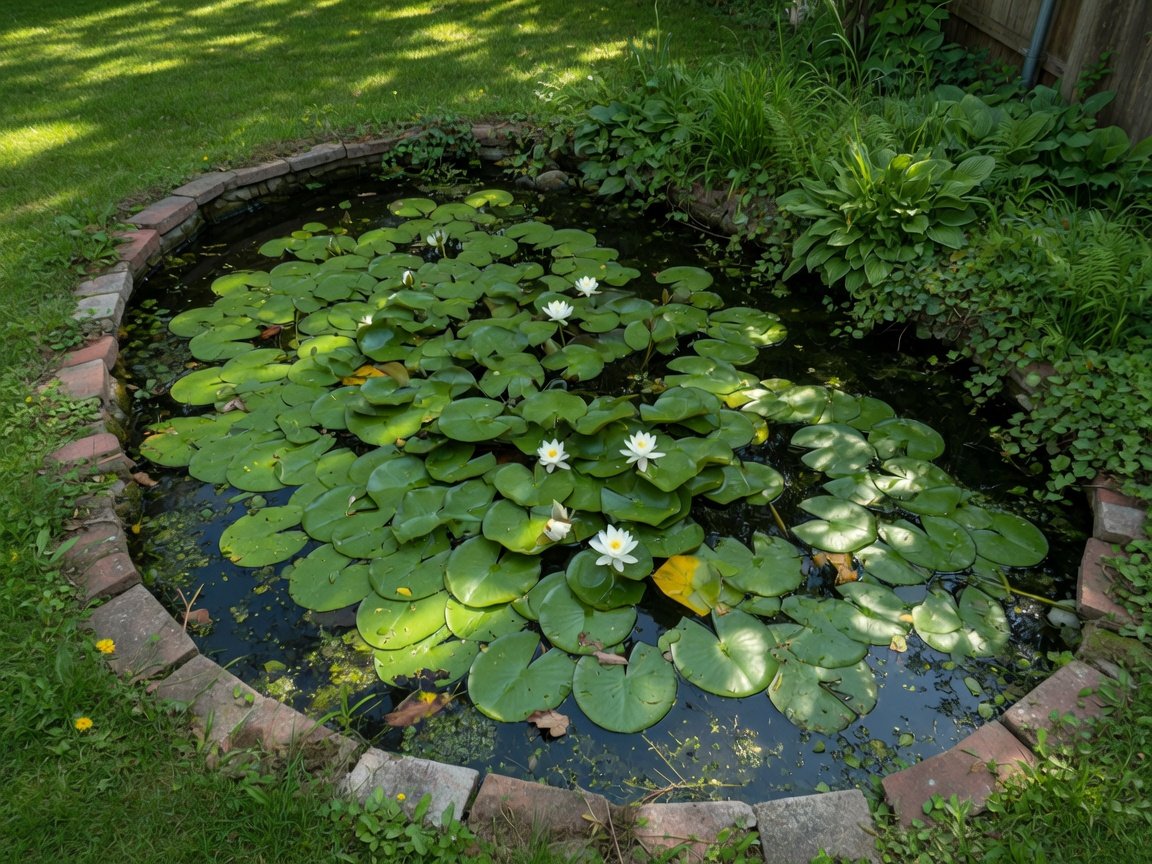
Lily pads look beautiful in small numbers. The problem starts when they spread beyond 30% of your pond’s surface — and they can reach that point faster than most pond owners expect.
When lily pads dominate a pond, they block sunlight from reaching submerged plants and the pond floor. Research from aquatic ecosystem management programs shows that heavy lily pad coverage can reduce dissolved oxygen levels by up to 40%, which stresses fish and accelerates algae growth beneath the surface. Less oxygen means lethargic fish, more frequent algae blooms, and a pond that smells noticeably worse over time.
Water temperature is another real concern. Lily pads trap heat at the pond surface. According to aquatic weed specialists at university cooperative extension programs across the U.S., ponds with dense floating plant coverage can run 5–8°F warmer than open-water ponds during summer months. For koi and goldfish, that temperature spike creates genuine physiological stress — especially during heat waves when pond water is already warmer than ideal.
Beyond water quality, overgrown lily pads make every aspect of pond maintenance harder. Netting debris becomes frustrating, algae treatments are less effective, and checking on your fish means peering through a thick mat of leaves and stems. Pumps and filters clog more frequently. And the pond’s aesthetic appeal drops fast once the pads dominate the view rather than accent it.
“Aquatic plant management isn’t about elimination — it’s about control. A pond with 20–25% lily pad coverage is often healthier than one with none at all. The goal is balance, not a bare water surface.”
— Aquatic Weed Management Specialist, Cooperative Extension Aquatic Plant Program
How Fast Do Lily Pads Spread? (The Numbers Might Surprise You)
Water lilies spread through underground rhizomes — thick, horizontal root stems that push through sediment and send up new shoots wherever conditions allow. A single rhizome can produce 5 to 10 new stems in a single growing season. In warm conditions, a small patch of lily pads can double its surface coverage every 3 to 6 weeks during summer.
Native species like the American white water lily (Nymphaea odorata) spread aggressively in nutrient-rich water. In ideal conditions — shallow water, silty sediment, and full sun — rhizomes extend 3 to 5 feet laterally per year. In a 10×10-foot pond, that kind of growth can lead to near-total surface coverage within two growing seasons if nothing is done.
Invasive species are even more aggressive. Yellow floating heart (Nymphoides peltata), common in ornamental pond plantings that have escaped containment, can colonize up to 80% of a water body’s surface in a single summer if left unmanaged, according to aquatic plant data compiled by state environmental agencies. If you identify this species in your pond, act immediately — don’t wait for it to establish.
The practical lesson: don’t wait. The longer lily pads establish, the deeper and more extensive the root network grows — and the harder removal becomes. A small patch you could remove in an afternoon turns into a half-day project within a few weeks of delay.
What Tools Do You Need to Remove Lily Pads From a Pond?
The right tools make lily pad removal faster and far less exhausting. You don’t need expensive equipment for most backyard ponds, but a few specific items make a genuine difference between a job that’s done well and one you have to redo in a month.
Essential Tools for Any Size Pond
- Pond rake: A wide-tined, long-handled rake is the most useful tool you’ll own. Look for a telescoping handle of 12–16 feet for deeper areas of the pond.
- Waders or waterproof gloves: Protect yourself from pond bacteria and submerged debris when working in the water. Never skip this step.
- Garden shears or serrated aquatic weed cutter: For cutting stems cleanly just above the rhizome before extraction.
- Wheelbarrow or large tarp: You’ll generate a surprising volume of plant material — have a disposal plan before you start.
- Long-handled skimmer net: Collects floating leaf fragments after cutting so they don’t decompose in the water and spike nutrient levels.
Optional Equipment for Larger Ponds
- Aquatic weed cutter: A serrated blade on a telescoping pole. Useful for cutting stems at depth without wading in — particularly helpful in ponds with soft, deep sediment.
- Pond vacuum: Helps remove decomposing root material and sediment from the pond floor after manual extraction.
- Mechanical weed harvester: For ponds over ½ acre. Floating mechanical harvesters can remove hundreds of pounds of plant material in a single session but typically require rental or professional operation.
How to Remove Lily Pads From a Pond — Step by Step
Follow these seven steps for lily pad removal that delivers lasting results. This process works for most backyard ponds. Very large ponds or severe infestations may need mechanical assistance after the initial assessment stage.
- Assess your pond’s coverage. Walk the full perimeter and estimate what percentage of the surface lily pads cover. Under 30% is manageable by hand in a single session. Between 30–60%, plan for two or three work sessions spread over a few weeks. Over 60% — particularly in ponds larger than ½ acre — consider mechanical removal or professional help before attempting anything by hand.
- Gear up before entering the water. Wear waterproof waders or thick rubber gloves. Pond sediment can carry harmful bacteria, and submerged plant stems and debris can cause cuts. Never work in a pond barefoot or with open wounds on your hands or feet.
- Cut each stem 3–4 inches below the waterline. Use garden shears or a serrated weed cutter to sever the stem just above where it meets the rhizome. Cutting below the waterline prevents air from entering the rhizome — this matters because air access speeds regrowth significantly. Simply pulling lily pads from the surface just tears the stem and leaves the entire root system intact and ready to resprout.
- Extract the rhizome from the sediment. Reach into the sediment where the cut stem enters the pond bottom and pull the rhizome out by hand. Rhizomes are typically 1–3 inches thick and can run several feet in multiple directions from a central crown. Pull slowly and steadily — jerking too hard snaps the rhizome and leaves fragments behind. Even a 6-inch piece of rhizome left in the sediment can regenerate a full plant by the following month.
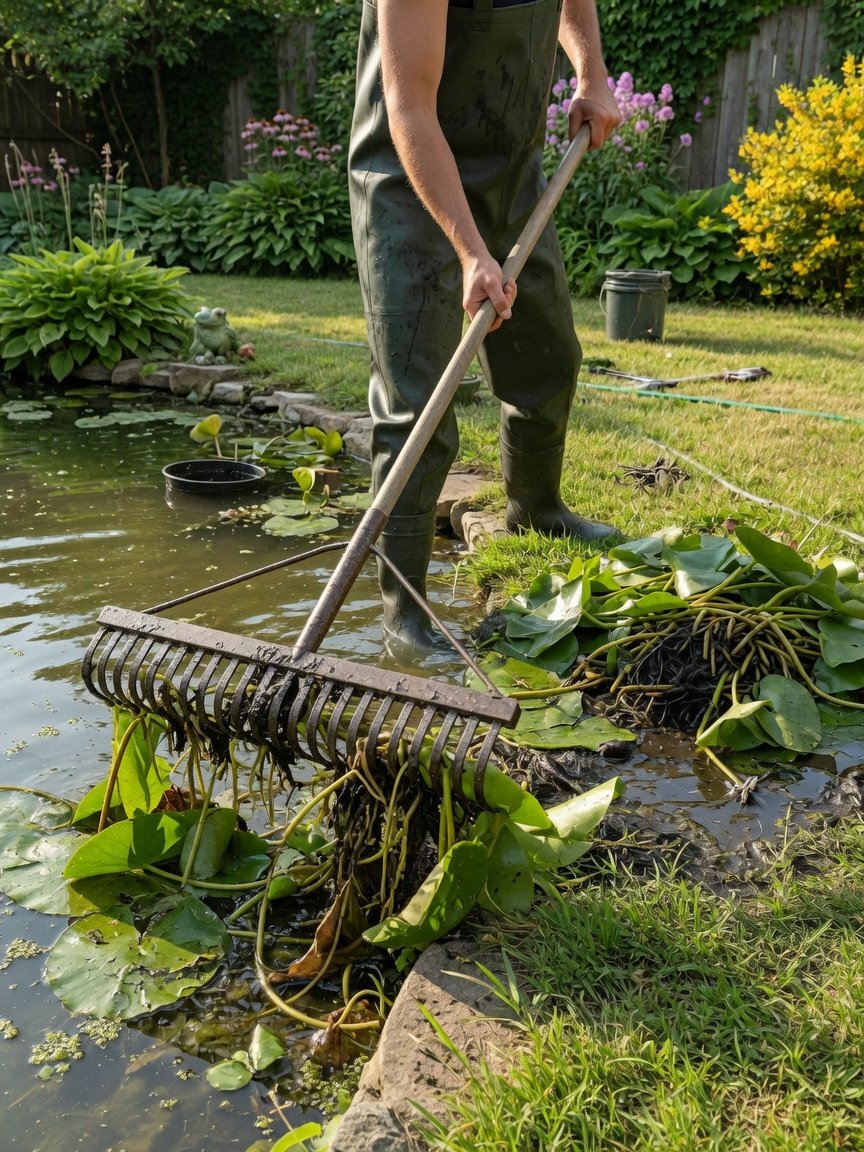
- Rake out debris and floating material. Use your pond rake to drag cut stems, leaf fragments, and root pieces toward the shore. Work in methodical rows from one side of the pond to the other rather than randomly grabbing clumps. Leave no floating debris — decomposing plant material consumes dissolved oxygen and fuels algae blooms as it breaks down.
- Dispose of plant material responsibly. Load everything into a wheelbarrow or onto your tarp. Compost it if local regulations allow, or bag it for general waste collection. Never return removed material to the water, and never dump it near a stream, creek, or drainage channel. Many lily pad species can re-establish from stem fragments and seeds that travel with water.
- Monitor weekly for four to six weeks. New shoots will emerge from any rhizome fragments left behind — this is essentially guaranteed. Pull these immediately when you spot them. Young regrowth comes out with the rhizome attached far more easily than established plants. Catching regrowth in the first few weeks costs minutes; ignoring it costs hours.
Cutting vs. Pulling: Which Lily Pad Removal Method Actually Works Better?
The short answer: pulling with root extraction beats cutting alone every time. But there are situations where each approach makes more sense than the others. Here’s a side-by-side breakdown to help you choose the right strategy for your pond.
| Method | Best For | Effectiveness | Time Required | Root Removal? | Approximate Cost |
|---|---|---|---|---|---|
| Hand-pulling with root extraction | Ponds under ¼ acre, moderate infestations | High — long-lasting results | 2–4 hours per session | Yes | Free (with basic tools on hand) |
| Pond raking only | Dense infestations, larger ponds, rapid debris removal | Moderate — regrowth likely | 1–3 hours per session | Partial | Cost of rake ($30–$80) |
| Cutting only (no root removal) | Temporary cosmetic control between full sessions | Low — regrowth in 3–4 weeks | 30–60 minutes | No | Minimal |
| Chemical aquatic herbicide | Large ponds, persistent invasives, professional application | High — when applied correctly | 30–60 days for full effect | N/A — kills from root up | $50–$300+ per application |
Cutting alone — just snipping lily pad stems at or just below the waterline — provides temporary cosmetic improvement. Pond management professionals consistently note that cutting without root removal causes regrowth within 3 to 4 weeks. You’re essentially mowing a lawn without pulling the roots. It looks tidy for a month, then you’re back where you started — and you’ve wasted the effort.
Raking without hand extraction falls somewhere in the middle. A pond rake can dislodge shallow rhizomes from soft sediment, but it rarely removes the full root network. It’s a good option for reducing biomass quickly or preparing for a more thorough root-extraction session. Think of raking as the first pass, not the final one.
Hand-pulling with complete root extraction is the gold standard for backyard ponds. It’s labor-intensive, but the results last. Combined with regular monitoring over the following month, it can keep a pond lily pad-free for an entire growing season from a single thorough removal session.
How to Remove Lily Pad Roots — The Step That Makes or Breaks Your Results
Root removal is where most DIY lily pad removal attempts fall short. People cut the pads, rake away the debris, and consider the job done — then wonder why the lily pads are back within the month. The answer is always the rhizome left behind in the sediment.
Lily pad rhizomes sit in the top 2 to 6 inches of pond sediment. In well-established plants, they spread horizontally in multiple directions from a central crown. A mature lily pad cluster can have a root network spanning 10 to 15 square feet beneath the water’s surface. You won’t see any of it from above — which is exactly why it gets skipped.
To remove roots effectively, cut the stem first, then work your fingers or a hand trowel into the sediment around the base of the cut stem. Feel for the horizontal rhizome — it’s usually about the diameter of your thumb and firm to the touch. Pull steadily and trace the rhizome in both directions. You won’t get every fragment, but removing the central crown and the main lateral extensions dramatically reduces regrowth potential. Remember: even a 6-inch rhizome fragment left in the sediment can regenerate a new plant within weeks under the right conditions.
Aquatic plant specialists recommend repeating root extraction at least twice per growing season in the first year after a heavy infestation. Regrowth from fragments becomes progressively weaker with each extraction session — by year two, most pond owners need only one annual session to maintain control and keep coverage at a healthy level.
“The rhizome is the lily pad’s survival mechanism. Remove the pads without removing the rhizome and you haven’t solved the problem — you’ve postponed it by about three weeks.”
— Pond Management Consultant, Aquatic Plant Control Program
Should You Use Chemicals to Remove Lily Pads From Your Pond?
Aquatic herbicides are effective against lily pads, but they come with trade-offs that make them a secondary option for most backyard pond owners — not a first resort. Understanding where they work well and where they don’t is important before you buy anything.
The most commonly used aquatic herbicides for lily pads contain active ingredients like fluridone, aquatic-labeled glyphosate, or diquat. Fluridone works systemically, killing the plant from the root up over 30 to 60 days. It’s highly effective against water lilies when used correctly, but requires careful application and must not be used in waters that drain to drinking water sources or sensitive ecosystems. Glyphosate-based aquatic formulations work faster but must contact foliage above the waterline — making them better suited for emergent plants than floating-leaf species like lily pads, where most of the leaf sits at the water surface rather than above it.
Regulatory requirements are another important factor. Many U.S. states require a permit before applying herbicides to any water body — even a private ornamental pond. Always check with your state’s department of environmental quality or fish and wildlife service before purchasing aquatic herbicides. Using unlicensed products in regulated water bodies carries real legal risk.
Cost adds up quickly too. Aquatic herbicide applications typically run $50 to $300 or more depending on pond size and product used. Multiple treatments over a season can become expensive compared to the one-time cost of a quality pond rake and a pair of waders.
When Chemical Treatment Makes Sense
- Pond size exceeds ½ acre and manual removal is not feasible
- Invasive species like yellow floating heart are present and spreading rapidly
- A licensed aquatic plant manager is handling the application with appropriate permits
- Manual removal has been attempted multiple times without achieving lasting control
When to Skip Chemical Treatment
- The pond contains fish or wildlife you’re concerned about stressing
- You want visible results faster than 30–60 days
- Your pond drains into a stream, river, or public waterway
- The infestation is moderate and manageable through manual methods
How to Stop Lily Pads From Coming Back After Removal
Removal is only half the battle. Preventing regrowth means addressing the conditions that make lily pads thrive in the first place. The good news: the same steps that reduce lily pad growth also improve overall pond health — so you’re investing in your pond’s long-term wellbeing, not just fighting one problem.
Reduce Pond Nutrients
Lily pads thrive in nutrient-rich water. High nitrogen and phosphorus levels — from fish waste, decomposing leaves, and lawn fertilizer runoff — fuel aggressive aquatic plant growth. Reduce nutrient load by installing a quality pond filter rated for your pond’s volume, using a pond vacuum to remove accumulated sediment annually, and minimizing fertilizer use on lawns and garden beds adjacent to the water’s edge.
Add Aeration
Aeration increases water circulation and raises dissolved oxygen levels throughout the pond — not just at the surface. Better circulation discourages the warm, stagnant conditions that lily pads prefer. According to pond management data from cooperative extension programs, a submersible aerator or fountain running through summer months significantly reduces the rate of lily pad regrowth while also benefiting fish health.
Use Pond Dye
Blue or black pond dye reduces sunlight penetration below the surface. Since lily pad rhizomes need light to initiate new growth, limiting subsurface light slows their spread noticeably without harming fish or wildlife. Pond dye is non-toxic at recommended application rates and costs around $20 to $40 per application for average-sized backyard ponds — one of the most cost-effective prevention tools available.
Introduce Competing Submerged Plants
Fast-growing submerged plants like hornwort (Ceratophyllum demersum) and anacharis (Egeria densa) compete directly with lily pad rhizomes for nutrients in the water column and sediment. Establishing a healthy population of submerged plants reduces the nutrient surplus that lily pads exploit. This is one of the most sustainable long-term management strategies available to backyard pond owners — you’re using the pond’s own ecosystem to hold aggressive species in check.
Contain Ornamental Lily Pads in Planting Baskets
If you want lily pads in your pond for aesthetics — and there’s no reason you can’t — plant ornamental varieties in submersible aquatic baskets rather than directly in pond sediment. Container planting physically limits rhizome spread, makes annual management easy, and lets you remove or reposition plants without disturbing the pond floor. This one step, done at the start, prevents overgrowth before it begins.
When Should You Call a Professional for Lily Pad Removal?
Most backyard pond owners can handle lily pad removal themselves with the right tools and a few hours on a weekend. But there are situations where professional aquatic plant management services are the smarter call — both for results and for your own time.
- Your pond is larger than ½ acre. Manual removal becomes impractical at this scale. Mechanical weed harvesters or professional herbicide application cover large surface areas far more efficiently than any amount of hand-raking.
- You’ve identified an invasive species. Species like yellow floating heart (Nymphoides peltata) or European frog-bit (Hydrocharis morsus-ranae) may be subject to state management requirements. Professionals understand the regulatory landscape and have access to treatment options not available to the general public.
- Three or more manual removal sessions haven’t worked. If lily pads rebound aggressively despite thorough root extraction, there may be an underlying nutrient problem, a deeper rhizome network than typical, or an identification issue — you might be dealing with a species that responds differently to standard removal. A professional assessment is worth the cost at this point.
- You need chemical treatment but lack a permit. In most U.S. states, applying herbicides to water bodies requires a permit. Licensed aquatic plant managers hold these permits, carry liability insurance for chemical applications, and know which products are approved for use in your specific situation.
Expect to pay $200 to $800 for professional pond plant management services, depending on pond size, infestation severity, species involved, and your location. For large ponds or persistent invasive species, this cost is typically justified by the time saved and the lasting quality of results.
Frequently Asked Questions About Removing Lily Pads From a Pond
Can you remove lily pads without draining the pond?
Yes — and in most cases you should. Hand removal, pond raking, and stem cutting all work with the pond full of water. Draining a pond to access lily pads is almost never necessary and causes significant stress to fish, beneficial bacteria colonies, and pond wildlife. Leave the water in place and work from the bank with long-handled tools, or wade in with proper protective gear.
How long does it take for lily pads to grow back after removal?
Lily pads regrow in 3 to 4 weeks when rhizomes are left intact in the sediment. With thorough root removal, regrowth from remaining fragments is much slower — typically 6 to 8 weeks before you see significant new growth, and that growth will be less vigorous. Consistent root extraction across two full growing seasons can reduce lily pad coverage to negligible levels in most backyard ponds.
Is it okay to leave some lily pads in the pond?
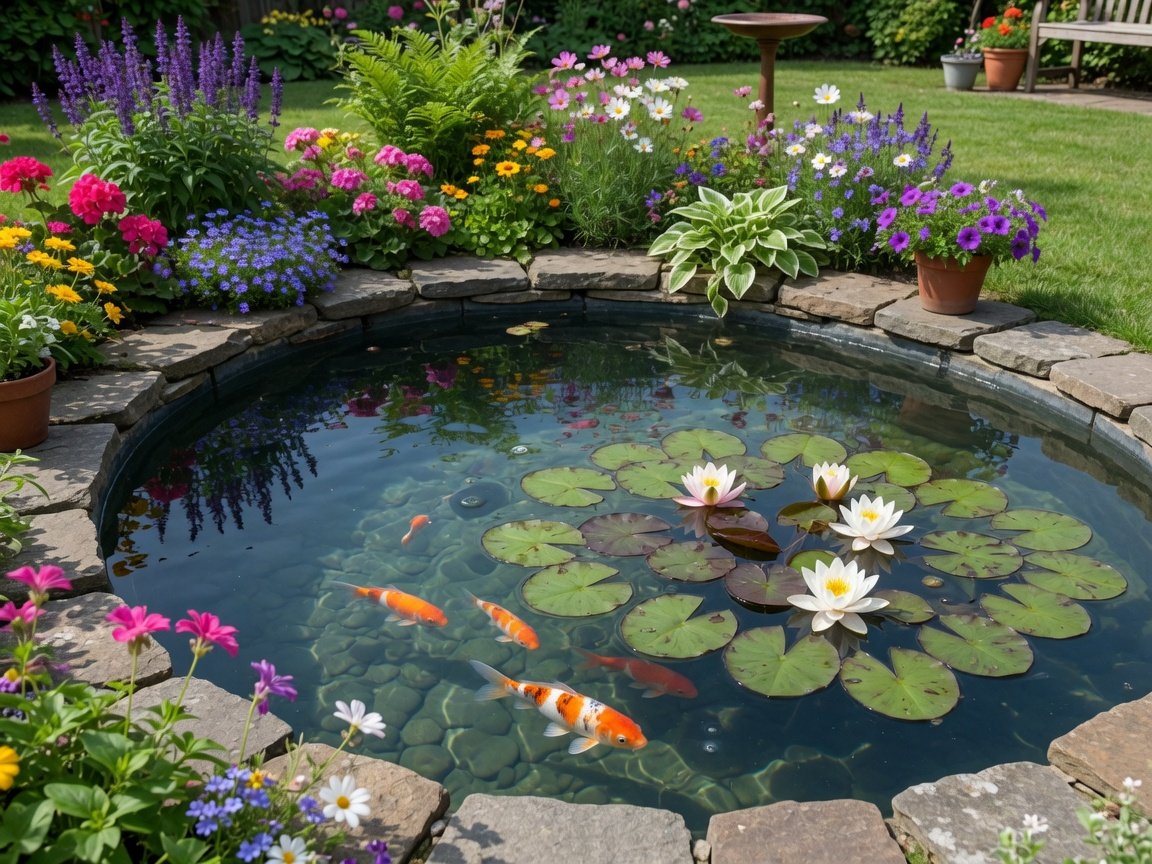
Absolutely — and in most ponds, moderate coverage is actually beneficial. Lily pads covering 20 to 25% of the pond surface suppress algae by blocking the sunlight it needs, offer shelter and cover for fish and frogs, and help regulate water temperature on hot summer days. The goal isn’t a bare pond — it’s a balanced one where lily pads enhance rather than dominate the ecosystem.
What is the best time of year to remove lily pads?
Late spring through early summer is the most effective window. Rhizomes are actively growing and still relatively concentrated near the central crown, making them easier to locate and extract. Fall removal works well too — plants are less vigorous as water temperatures drop, and rhizomes come out more cleanly heading into dormancy. Mid-summer removal is the hardest option because rhizomes have spread their furthest during the peak growing season.
Can lily pads harm fish in the pond?
Heavy coverage can harm fish by reducing dissolved oxygen levels and raising water temperatures beyond comfortable ranges. However, light to moderate lily pad coverage — under 25% of the surface — is generally beneficial for fish. It provides shade, hiding spots from aerial predators, and surface cover that pond fish actively seek out. The harm comes from overgrowth and oxygen depletion, not from the plants themselves at reasonable coverage levels.
Do pond fish eat lily pads?
Grass carp (Ctenopharyngodon idella) are sometimes introduced as a biological control for aquatic vegetation and will consume various pond plants. However, they’re less enthusiastic about mature water lily tissue specifically, preferring softer, more palatable plant matter. Koi and goldfish nibble at lily pad roots and new growth occasionally but don’t consume nearly enough to make a dent in an established infestation. Grass carp are also heavily regulated in many U.S. states — check your local fish and wildlife regulations before considering this option.
Your Action Plan: Get Started This Weekend
Removing lily pads from a pond is straightforward when you follow the right sequence. The work is physical, but the results are immediate and satisfying — a clear water surface, healthier fish, and a pond that finally looks the way you imagined when you first built it.
Here’s exactly what to do over the next few weeks:
- Day 1 — Assess and gather tools. Walk your pond, estimate coverage percentage, and confirm you have a pond rake, waders or waterproof gloves, and garden shears. Pick up anything missing at your local hardware or garden centre before the afternoon session.
- Day 1 afternoon — First removal session. Start on the most heavily covered section of the pond. Cut stems below the waterline, extract rhizomes by hand, and rake out all floating debris. Stop when you’re tired rather than rushing — hurried root extraction leaves too much behind and undermines the whole effort.
- Day 2 — Second section and cleanup. Tackle the next section and collect all floating debris from day one that has settled. Dispose of all plant material away from the pond and any nearby waterways.
- Weeks 2 and 3 — Monitor and pull new growth. Check for regrowth every three to four days. Pull immediately — young shoots come out cleanly and take about 30 seconds each. Don’t let them reach the two-inch stage.
- End of season — Put prevention steps in place. Install or upgrade aeration, reduce pond nutrient load, consider pond dye for next spring, and plant submerged competitors in nutrient-competing positions. Next year, you’ll have far less work to do — and your pond will be healthier across the board.
Lily pad management isn’t a one-and-done task — but it gets easier every year you stay on top of it. With consistent root extraction and the right prevention measures in place, most pond owners settle into a simple rhythm where an hour or two each spring keeps everything exactly where they want it.
For more pond management guides, water quality tips, aquatic plant advice, and equipment reviews tailored to backyard pond owners, explore the full resource library at The Pondineer.
—