Costia — scientifically known as Ichthyobodo necator — is one of the most aggressive protozoan parasites your koi or goldfish can face. Catch it early with the right treatment and your fish will recover. Leave it too long, and it can devastate an entire pond in a matter of days.
Some of the links in this article may be affiliate links. If you make a purchase through these links, we may earn a small commission at no extra cost to you. Thank you.
This guide covers everything: what Costia actually is, how to recognise it before the damage gets serious, and the exact treatment methods that work — whether you’re dealing with a single sick fish or a full pond outbreak. No guesswork, no fluff.
- Costia thrives in cool water between 2°C and 20°C — spring and autumn are your highest-risk seasons
- Early warning signs include flashing, clamped fins, excess mucus production, and laboured breathing
- Salt at 3–5g per litre handles mild cases; potassium permanganate and proprietary pond medications tackle heavier outbreaks
- Strict quarantine, solid filtration, and regular fish health checks are your best long-term defences
What Is Costia and Where Does It Come From?
Costia (Ichthyobodo necator) is a microscopic flagellate protozoan — a single-celled parasite that colonises the skin and gills of freshwater fish. It’s one of the smallest fish parasites you’ll ever deal with, measuring just 10–20 micrometres. Under a microscope it has a distinctive pear-shaped body with two pairs of flagella — whip-like tails it uses both to move through water and to anchor itself to the fish’s tissue.
Once attached, Costia doesn’t sit passively on the surface. It actively burrows into the epidermal cells of the skin and gills, injecting toxins that break down the cell from the inside. It feeds on the cell contents, then moves on to healthy tissue — leaving a trail of destruction behind it. In heavy infestations, entire patches of gill tissue can be obliterated, making it impossible for the fish to breathe properly.
Temperature is the key factor driving Costia’s behaviour. The parasite thrives when water sits between 2°C and 20°C, making early spring and late autumn the most dangerous windows for pond keepers. Above 25°C it struggles to survive — but that doesn’t mean a warm summer gives you a free pass. Any dip back into cooler temperatures can trigger a resurgence if Costia is still present in the pond.
Costia enters your pond through direct fish-to-fish contact, contaminated water, shared equipment, or — most commonly — new fish introduced without quarantine. It can survive briefly in the water column without a host, so a single infected fish genuinely puts every other fish in the pond at risk within hours.
What Are the Symptoms of Costia in Koi and Goldfish?
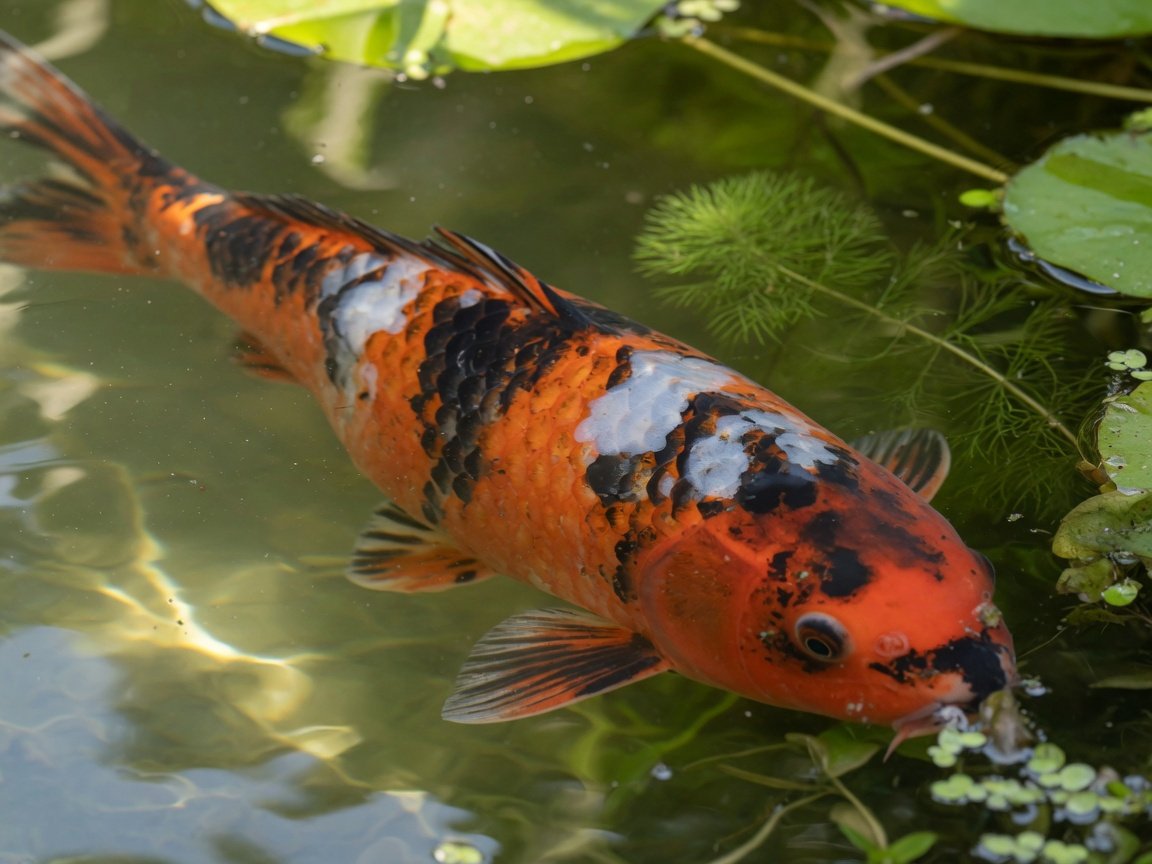
Catching Costia early is everything. The challenge is that its early symptoms look a lot like general stress or poor water quality — which means many pond keepers don’t realise there’s a parasite involved until the infestation has taken hold. Watch both behaviour and physical appearance closely, especially during the cooler months.
Behavioural signs to look for:
- Flashing and rubbing — fish darting and scraping themselves against pond walls, rocks, or the pond floor to relieve irritation on their skin or gills
- Lethargy — fish hanging near the surface or sitting motionless at the bottom, barely responding to stimulus
- Loss of appetite — refusing food or taking it and immediately spitting it out
- Laboured breathing — rapid gill movement, or gasping at the water surface
- Twitching — occasional spasms, jerky movements, or shimmying in place
Physical signs that appear as the infestation progresses:
- Grey or white filmy patches — a milky, slimy coating on the skin, most visible around the head, back, and flanks
- Red inflamed areas — irritated skin where Costia has been feeding, sometimes mistaken for early fin rot
- Excess mucus — the fish’s immune system ramps up mucus production as a defence, creating a visible sliminess
- Clamped fins — fins held tight to the body rather than fanned out naturally
- Gill damage — in severe cases, gill tissue appears swollen, red, or partially eroded when you lift the gill plate
- Ulcers — open sores in advanced infections that open the door to secondary bacterial infections
One thing that catches pond keepers off guard: Costia can cause significant respiratory distress even before the physical signs are obvious. If fish are gasping at the surface and your water parameters are fine, don’t write it off as a dissolved oxygen issue — a parasitic infection is entirely possible. A skin or gill scrape under a microscope is the only definitive way to confirm it.
How Is Costia Diagnosed?
Visual inspection alone won’t get you a confirmed Costia diagnosis. The symptoms overlap too heavily with other common pond parasites — white spot (Ichthyophthirius), Trichodina, Chilodonella, and gill flukes can all look similar at first glance. The only reliable diagnostic method is a wet mount scrape examined under a microscope.
Here’s how a skin scrape works:
- Carefully net the fish and hold it gently in a wet cloth or soft mesh — keeping it moist throughout
- Hold a microscope slide flat against the fish’s side and drag it gently from front to back along the flank, picking up a small amount of mucus
- For a gill scrape, carefully lift the gill plate and collect a tiny sample of gill tissue
- Place the mucus or tissue sample on a slide, add a drop of the fish’s own pond water, and cover with a glass coverslip
- Examine under a microscope at 100–400x magnification
Under magnification, Ichthyobodo necator appears as tiny, pear-shaped cells moving rapidly and erratically — the flagella give it a tumbling, spinning appearance that’s quite distinctive once you’ve seen it. If you’re seeing highly active, fast-moving micro-organisms on the slide, you’ve almost certainly found your culprit.
No microscope? Contact a local koi specialist, aquatic veterinarian, or koi keeper’s club — many offer scrape services or can point you toward someone who does. Treating without a confirmed diagnosis is sometimes necessary in an emergency, but knowing exactly what you’re dealing with means you can pick the most effective treatment first time and avoid stressing your fish with the wrong medication.
How to Treat Costia in Koi: Step by Step
Koi are particularly vulnerable to Costia damage because the parasite targets gill tissue aggressively, and gill damage impairs breathing before the external signs become dramatic. The moment you suspect Costia, start treatment — don’t wait for symptoms to worsen.
Step 1: Isolate symptomatic fish
If one or two koi are showing symptoms, move them to a quarantine tank immediately. This slows the spread to healthy fish and lets you treat more precisely. Quarantine tanks must be well aerated — many Costia treatments reduce dissolved oxygen, and compromised gill function means your fish need every bit of oxygen they can get. A quality air pump running in the quarantine tank throughout treatment is non-negotiable, not optional.
Step 2: Test and correct water quality
Before adding any treatment, test ammonia, nitrite, nitrate, and pH. Poor water quality weakens fish immune responses and makes treatments less effective. Costia outbreaks are almost always preceded by a period of stress — often driven by poor water conditions. Fix the water, then treat the parasite.
Step 3: Choose and apply treatment
For koi in a quarantine setup, the main treatment options are:
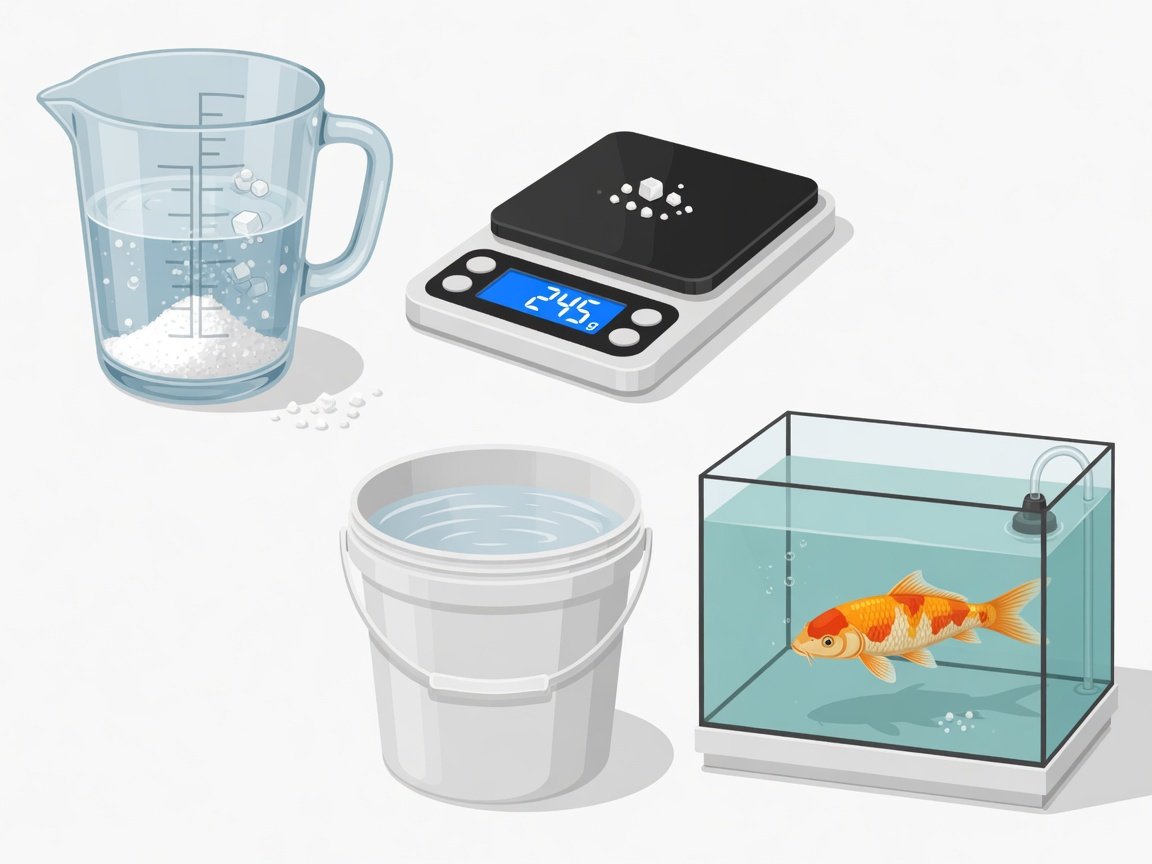
- Salt (sodium chloride) — 3–5g of non-iodized pond salt per litre of water. Effective for mild to moderate infestations; creates an osmotic environment hostile to the parasite
- Potassium permanganate (KMnO₄) — 2–5mg/L for extended treatment or up to 10mg/L as a short dip (10 minutes maximum with constant monitoring). An oxidising agent that kills surface-dwelling parasites efficiently
- Formalin — 25–50mg/L in a well-aerated quarantine tank. Highly effective but requires careful handling, strong aeration, and close fish monitoring throughout
- Proprietary antiparasitic treatments — commercial products containing malachite green, acriflavine, or formaldehyde-based compounds. Follow the manufacturer’s dosage exactly and check the product is suitable for koi
Step 4: Monitor throughout
Never leave treated koi unattended for extended periods. If fish show extreme stress — rolling, frantic gasping, erratic spinning — remove them into clean aerated water immediately. Treatment stress is real, and a fish that survives the parasite shouldn’t be lost to an overdose.
Step 5: Repeat at day 5–7
Most Costia treatments need a second round to catch any parasites that survived the first application. Check the product instructions for the recommended repeat interval and always follow them — treating too soon or too late undermines the effectiveness of the whole course.
How to Treat Costia in Goldfish
Goldfish are hardy, but Costia can knock them back hard — especially when they’re already under stress from overcrowding, poor nutrition, or suboptimal water conditions. The treatment principles are the same as for koi, but goldfish have a few considerations worth knowing.
Goldfish generally tolerate salt well. Start with 3–4g of non-iodized salt per litre in a quarantine tank for mild to moderate cases. Maintain that salt concentration for at least 5–7 days, doing 20–25% partial water changes every 2–3 days and adding replacement salt to compensate for what’s removed. Salt doesn’t evaporate, so you only need to top it up after water changes.
For more serious infestations, choose a commercial treatment specifically designed for coldwater fish. This matters — some tropical fish treatments are formulated at concentrations that are too aggressive for goldfish. Always check the label before dosing.
Keep aeration running constantly throughout treatment. Costia’s primary target is gill tissue, meaning infected goldfish are already struggling to extract oxygen from the water. Any reduction in dissolved oxygen during treatment compounds the problem significantly. An air stone running in the hospital tank is one of the cheapest, most important things you can do.
After treating individual fish, sterilise every piece of equipment that came into contact with the quarantine tank — nets, buckets, thermometers, scrapers — before it goes near your main pond. Costia can survive on damp surfaces long enough to reintroduce the infestation and undo all your work.
How to Treat a Whole Pond for Costia
When multiple fish are symptomatic, the whole pond is infected. At that point, isolating individuals isn’t realistic — you need to treat the entire body of water. Whole-pond treatment is more involved, but entirely manageable with the right approach.
Start by calculating your pond volume accurately. Under-dosing wastes time and money; overdosing can kill your fish. Use this formula: Length (m) × Width (m) × Average Depth (m) × 1,000 = litres. If your pond has irregular edges or variable depth, break it into sections and add them together.
Whole-pond treatment options:
| Treatment | Dose | Duration | Notes |
|---|---|---|---|
| Pond salt | 3g per litre | 5–7 days minimum | Add dissolved, gradually over 24–48 hours |
| Potassium permanganate | 2–5mg/L | 4–8 hours active | Solution turns brown when spent |
| Commercial antiparasitic | Per label | Per label | Safest option for most pond keepers |
| Formalin | 25–50mg/L | Short exposure | Strong aeration essential; careful handling required |
Before dosing, switch off your UV steriliser. UV light degrades most antiparasitic medications before they can do their job — turn it off at least 24 hours before adding treatment. Also remove any activated carbon from your filter; carbon adsorbs medications out of the water and will neutralise the treatment. Your biological filter bacteria should be fine with most antiparasitic treatments, but check the specific product you’re using. Once the treatment course is complete and you’ve done a partial water change, adding a quality dose of beneficial bacteria helps your pond’s biology recover faster after the chemical stress.
Run aeration at maximum throughout the treatment period. A full pond under chemical treatment is a stressful environment for your fish, and adequate dissolved oxygen makes a real difference to how well they cope. If your UV steriliser is off, your main aeration system is carrying even more of the load — make sure it’s functioning at full capacity.
Does Salt Treatment Work for Costia?
Salt is one of the most debated topics in pond keeping, and for Costia specifically the honest answer is: yes, it works — but the severity of the infestation determines whether it’s enough on its own.
Salt works by exploiting osmosis. At concentrations of 3–5g per litre, the surrounding water becomes hypertonic relative to the parasite’s cell contents. Fish can tolerate this moderate salt concentration because their mucus coat and osmoregulatory systems adapt, but Costia — an obligate parasite without the same physiological flexibility — suffers significant osmotic stress. At effective concentrations, the parasite’s ability to regulate water and ions across its membrane breaks down, killing or disabling it.
For a short-term salt dip in a bucket or hospital tank, a higher concentration of 5g/L for 10–15 minutes can work as a rapid treatment for individual fish. Watch the fish closely the entire time — any sign of extreme distress means you remove it immediately into clean aerated water.
For longer treatment in a quarantine tank or pond, 3–3.5g/L maintained for at least a week is the standard approach. An important detail: salt doesn’t evaporate. It only leaves the water when you remove water through partial changes, so top up only the salt removed, not the full concentration.
The honest limitation: salt is a first-line response, not a cure-all. For heavy infestations, or when fish are already significantly damaged, you’ll almost certainly need a targeted antiparasitic medication working alongside the salt. Think of salt as an immediate response measure and a supportive treatment, not a standalone solution for serious cases.
What Temperature Kills Costia?
Costia is at its most dangerous in cool water. Its optimal range for reproduction and activity is roughly 2°C to 20°C. As water rises above 20°C, the parasite becomes progressively less active, and above 25°C it struggles to survive.
In theory, raising your pond water above 25°C would suppress the infestation. In practice, this isn’t a viable treatment. Rapidly increasing water temperature stresses koi and goldfish significantly — and if you can’t sustain that elevated temperature, Costia rebounds the moment the water cools. You’d also be creating ideal conditions for bacterial pathogens to flourish while trying to suppress the parasite.
What the temperature relationship does tell you is when to be most vigilant. Late winter, early spring, and autumn — when pond temperatures typically sit in that dangerous 2–15°C zone — are your highest-risk windows. This is when routine health checks matter most: watch your fish closely during feeding, and be on alert for the early behavioural signs of trouble. Building these checks into a proper seasonal pond care routine means you’ll catch problems early, when they’re far easier to treat.
How to Prevent Costia from Coming Back
Treating Costia once is stressful for you and your fish. The goal after clearing an outbreak is making sure it doesn’t happen again. Effective prevention comes down to four pillars: biosecurity, water quality, pond management, and consistent health monitoring.
Quarantine every new fish — without exception
Costia is most commonly introduced by new fish, and “it came from a reputable source” is not a substitute for quarantine. Any fish entering your pond — koi or goldfish, from a shop or a friend — should spend at least four to six weeks in a separate quarantine tank before joining the main pond. Watch for symptoms throughout, and consider a precautionary salt treatment before transfer.
Keep water quality excellent
Costia outbreaks are almost always opportunistic — they take hold when fish are already stressed by poor water conditions. Elevated ammonia or nitrite levels suppress fish immune systems, making them far more susceptible to parasitic infection. A properly sized biological filter is your backbone here. If your current setup is struggling to keep up with your fish load, upgrading to a filter built for your pond’s actual demands is one of the most impactful investments you can make in fish health.
Sterilise shared equipment
Nets, buckets, scrapers, and thermometers that move between tanks or ponds can carry Costia on damp surfaces. Either dedicate separate equipment to each body of water, or sterilise between uses using a dilute bleach solution — and rinse everything thoroughly before it touches fish or fish water again.
Avoid overcrowding your pond
Too many fish in too little space depletes oxygen, creates stress, and accelerates parasite transmission dramatically. Keep your stocking level within what your filtration system can comfortably process. If you’re regularly battling water quality issues, the fish load — not the filter — is usually the first thing to address.
Monitor fish health consistently
Daily observation during feeding is your best early warning system. Look for anyone hanging back, flashing, showing clamped fins, or behaving out of character. Costia caught in its early stages — before gill tissue is significantly damaged — responds much better to treatment and puts far less stress on the fish. Bear in mind that when a fish’s immune system is under pressure from one parasite, secondary bacterial infections like fin rot can follow — early intervention on Costia reduces that risk significantly.
Frequently Asked Questions About Costia in Koi and Goldfish
Can Costia kill koi and goldfish?
Yes, Costia can be fatal without treatment. The parasite progressively destroys gill tissue, which impairs the fish’s ability to extract oxygen from the water. In severe infestations this leads to respiratory failure. Young fish, fish weakened by other illness, and those in poor water conditions are most at risk. Fast treatment dramatically improves outcomes — the difference between catching it early and treating late can determine whether your fish survive.
How quickly does Costia spread through a pond?
Extremely quickly. Costia reproduces by binary fission — one cell splits into two — and can complete its entire life cycle in a matter of hours under ideal conditions (cool water, multiple host fish available). A minor infestation can escalate to a full pond outbreak within days. This speed is precisely why daily fish observation is so valuable — catching it in the first few days makes an enormous difference.
Is Costia visible to the naked eye?
No. Costia measures just 10–20 micrometres — completely invisible without magnification. You can see the effects on the fish (milky patches, red inflamed areas, excess mucus) but not the parasite itself. A wet mount skin or gill scrape examined under a microscope is the only way to confirm the diagnosis definitively, rather than treating based on symptoms alone.
Can I treat Costia with just salt?
Salt at 3–5g per litre is effective for mild to moderate infestations and is an excellent supportive treatment in all cases. For heavy outbreaks, or when fish are already significantly damaged, you’ll need a dedicated antiparasitic medication as well. Salt alone won’t always be sufficient to clear a serious infestation — use it as a first response and an ongoing support, not as your sole treatment when things are already bad.
Should I treat the whole pond or just the sick fish?
If only one or two fish are symptomatic, isolating them in a quarantine tank is a good first move. But Costia spreads through water contact, so the other fish in your pond have almost certainly been exposed already. If more than one fish is showing symptoms, treat the whole pond. Even when you isolate individual fish for intensive treatment, a precautionary treatment of the main pond is worth doing to prevent a full outbreak developing while you’re focused on the sick fish.
Should I turn off my UV light when treating for Costia?
Absolutely. UV sterilisers degrade most antiparasitic medications rapidly — often before the treatment has had time to work. Switch your UV unit off at least 24 hours before adding any medication, and leave it off for the full treatment course. Once treatment is complete and you’ve done a partial water change, switch it back on. A good UV steriliser is excellent for long-term pond hygiene, but it works against you during active treatment.
What’s the difference between Costia and white spot?
Both are protozoan parasites, but they present quite differently. White spot (Ichthyophthirius multifiliis) shows up as distinct white dots on the skin and fins — like grains of salt scattered across the body. Costia produces a grey or milky film without clear individual spots. The treatments also differ, which is why getting a proper diagnosis matters — treating white spot with a Costia protocol (or vice versa) wastes time and stresses the fish unnecessarily.
How long does Costia treatment take?
Expect a minimum of 7–14 days for a full treatment course, including the follow-up dose at days 5–7 to catch any surviving parasites. Some fish show improvement within the first 48–72 hours of treatment, but visible improvement doesn’t mean the infection is cleared — complete the full course. After treatment, continue monitoring closely for at least two weeks to confirm the infestation hasn’t returned.
—