
Muskrats can devastate a healthy pond in a single season — burrowing through earthen banks, stripping aquatic vegetation bare, and undermining dam structures from within. To get rid of muskrats in your pond effectively, you need to combine rapid population reduction through trapping with habitat modification and, where structurally critical, physical exclusion. Done right, this three-part approach delivers lasting results even against one of the most adaptable small mammals in North America.
Some of the links in this article may be affiliate links. If you make a purchase through these links, we may earn a small commission at no extra cost to you. Thank you.
Key Takeaways
- Muskrat burrow tunnels can reach 45 feet in length — long enough to hollow out an entire pond dam embankment from the inside
- A single female produces 2–3 litters per year in northern states, each with 3–8 young; in southern states that climbs to 5–6 litters annually
- The #110 Conibear body-grip trap set at an active burrow entrance is the most consistently effective and widely recommended removal method
- No commercial repellents are currently registered or proven effective for muskrat control in the United States — habitat modification is the real long-term solution
- Muskrats are classified as furbearers in most U.S. states — always verify your state’s permit and licensing requirements before trapping
What Are Muskrats and Why Are They So Destructive to Ponds?
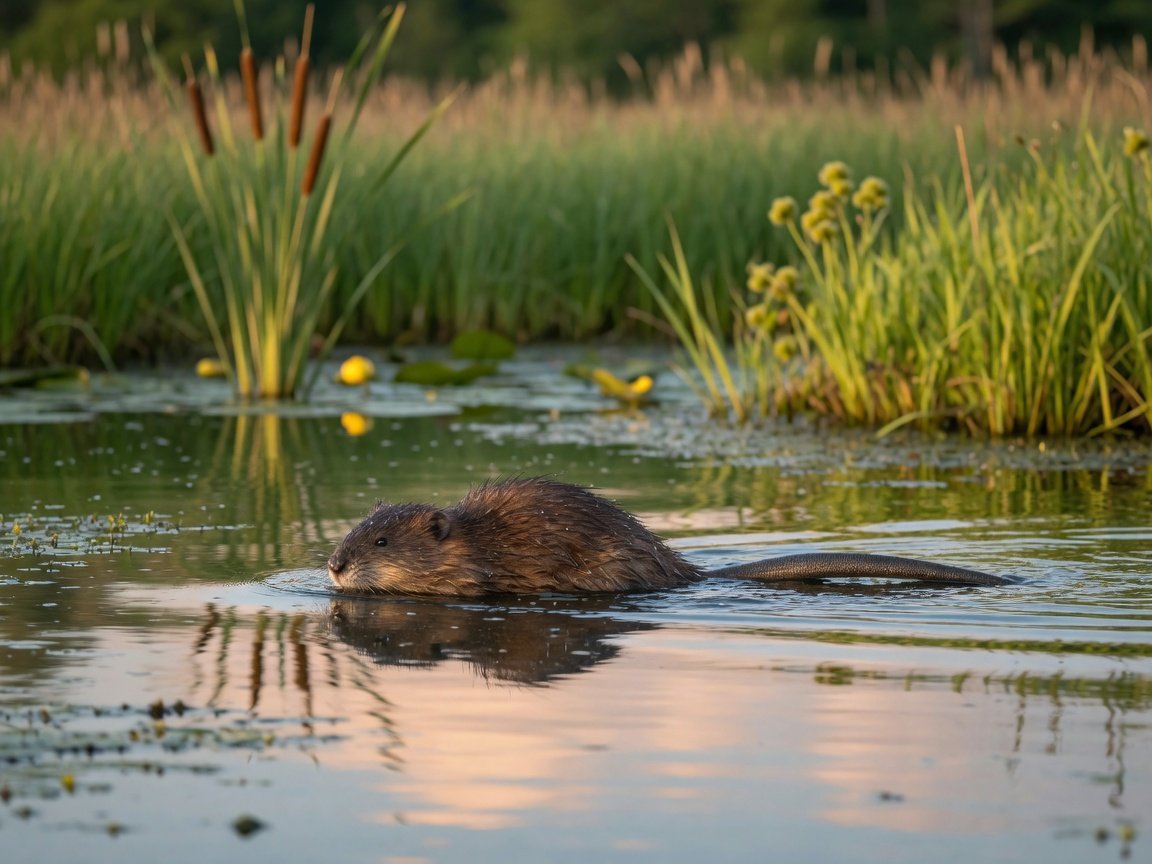
Muskrats (Ondatra zibethicus) are semi-aquatic rodents native to North America. They look something like an oversized rat — dense brownish-black waterproof fur, a narrow scaly tail flattened side-to-side, and partially webbed hind feet that make them surprisingly strong swimmers. Adults typically weigh 1.3 to 4.5 pounds and measure 22 to 25 inches from nose to tail. Small animal, outsized damage.
The primary threat to pond owners is burrowing. Muskrats excavate bank dens with entrances located 6 to 18 inches below the waterline — completely invisible from a casual shoreline walk. Inside, those tunnels angle upward through the bank and can extend up to 45 feet horizontally into the embankment, according to the Missouri Department of Conservation. The dry living chamber at the far end can be 10 to 12 inches across and sit up to 15 feet from the entrance. In an earthen pond dam, this network of tunnels creates structural weak points that can fail catastrophically under hydrostatic pressure.
According to research cited by the Association of State Dam Safety Officials (ASDSO), rodent damage to earthen structures costs the United States more than $1 billion annually (Bayoumi & Meguid, 2011). That figure isn’t abstract: in 2012, rodent burrowing contributed directly to the failure of Santa Clara Dam in Utah, causing approximately $7.5 million in property and infrastructure damage and displacing 61 homes and 16 businesses.
Beyond structural risk, muskrats are voracious herbivores. Their diet centers on aquatic and emergent plants — cattails, bulrush, water lilies, sedges, arrowhead, and pondweed are prime targets. They prefer still to slow-moving water that is 15 to 40 inches deep for nest construction, according to Baker (1983) via Animal Diversity Web, which means most pond margins are essentially ideal habitat.
Reproduction compounds the problem fast. In northern states, females produce 2 to 3 litters per year with a gestation period of just 25 to 30 days. In southern states, that number climbs to 5 or 6 litters annually. Each litter contains 3 to 8 young, and population densities in suitable habitat can reach up to 8 animals per acre in marsh settings, according to Wildlife Illinois. Left unmanaged, a pair of muskrats can become a significant colony within 18 months.
How Do You Identify Muskrat Activity in Your Pond?
Before spending time and money on control measures, confirm that muskrats are actually the culprit. Beavers and, in some southern states, nutria cause similar damage — and the right control approach depends on accurate species identification. Here’s what to look for.
Classic Signs of Muskrat Presence
- Bank burrow entrances: Rounded holes 4 to 6 inches in diameter at or just below the waterline. The bank surface near the entrance typically shows fresh mud smears, drag marks, and loose plant material.
- Feeding platforms: Flat, floating rafts of cut vegetation — usually 1 to 3 feet across — anchored in shallow water near emergent plant stands. Muskrats use these as dining stations, leaving piles of partially eaten stems behind.
- Conical lodges: In very shallow ponds, muskrats sometimes build above-water mound lodges from mud and vegetation, typically 2 to 4 feet high. These are smaller and less structured than beaver lodges.
- Clipped vegetation: Cleanly cut cattail, bulrush, and reed stems at the waterline, often with floating stem sections scattered across the surface near active feeding areas.
- Slides and runways: Smooth, worn paths through shoreline vegetation where muskrats regularly enter and exit the water.
- Unexplained water level drop: A slow, unexplained decline in pond level can indicate muskrat tunnels have breached the bank and are allowing seepage. This is a serious warning sign that needs immediate investigation.
Muskrat vs. Beaver: Quick Identification
The easiest distinguishing feature is the tail: a beaver’s tail is wide, flat, and paddle-shaped (horizontal); a muskrat’s tail is narrow, scaly, and flattened side-to-side (vertical). Beavers are dramatically larger — 35 to 65 pounds versus the muskrat’s 1.3 to 4.5 pounds. Evidence of felled trees and water-impounding dam construction strongly indicates beaver. Burrow-only damage with vegetation feeding rafts but no gnawed wood almost always means muskrats.
Do You Need a Permit to Remove Muskrats From Your Pond?
This is the step most pond owners skip — and it’s the one that can create real legal exposure. Muskrats are classified as furbearers in virtually every U.S. state where they occur, meaning they’re regulated by state wildlife agencies. Trapping them outside of an established season may require a permit, even on your own land.
The good news is that most states make reasonable accommodations for property owners dealing with damage. Many states — including Missouri, Indiana, and South Carolina — allow landowners to remove damage-causing muskrats on their own property without a permit, even outside regular trapping seasons. Other states require a nuisance wildlife or depredation permit from the state wildlife agency before any out-of-season removal. Some require a valid trapping license regardless of whether you own the land.
Trapping seasons vary considerably by region. For reference, the 2024–2025 season ran October 26 through May 10 in North Dakota; November 1 through February 28 in Iowa; November 10 through February 15 in Illinois; October 25 through March 31 in Vermont. Maryland extended its muskrat trapping season through March 22 in select counties as recently as March 2024. These dates change annually — always confirm the current season with your state agency.
Landowners should always contact their state wildlife agency before beginning any muskrat removal program,” says Robert A. Pierce II, Extension Fisheries and Wildlife Specialist at the University of Missouri. “The regulations vary considerably by state and even by county. Getting the right information upfront protects both the resource and the landowner.”
The practical takeaway: call or visit your state’s Department of Natural Resources or Fish and Wildlife website before setting a single trap. A five-minute call can save you a significant fine and ensure your control program is both legal and defensible.
What Are the Most Effective Methods to Get Rid of Muskrats in Ponds?
There’s no single silver bullet for muskrat control. The most durable programs combine at least two approaches: trapping for immediate population reduction, followed by habitat modification and, where warranted, physical exclusion to prevent reinfestation. Here’s how the main options compare side by side.
| Method | Effectiveness | Best Application | Approximate Cost | Timeframe |
|---|---|---|---|---|
| Body-grip trap (#110 Conibear) | ★★★★★ Very High | Active burrow entrances; rapid removal | $8–$15/trap | Days–weeks |
| Cage/live trap | ★★★★ High | Single animals; areas with trap restrictions | $40–$80/trap | Days–weeks |
| Floating muskrat trap | ★★★★ High | Open water; minimum 12″ depth required | $30–$60/trap | Days–weeks |
| Foothold trap (#1–#1.5, drown set) | ★★★★ High | Active runs; experienced trappers only | $5–$12/trap | Days–weeks |
| Habitat modification | ★★★★ High (long-term) | Prevention; post-trapping maintenance | Moderate–Variable | Months–seasons |
| Riprap/wire exclusion | ★★★★★ Very High (permanent) | Dam faces; structurally critical bank sections | Moderate–High | Permanent |
| Repellents | ★ None registered | Not recommended — no proven effectiveness | Low | N/A |
How Do You Trap Muskrats in a Pond? Step-by-Step Guide
Trapping is your fastest tool for reducing an existing muskrat population. “Trapping is the most practical and effective means of reducing muskrat populations and preventing damage,” according to James E. Miller, Professor Emeritus at Mississippi State University and lead author of the USDA APHIS Wildlife Damage Management Technical Series on muskrats. The two most widely used trap types are body-grip traps and cage traps — each suited to different situations.
Body-Grip Traps: The Professional Standard
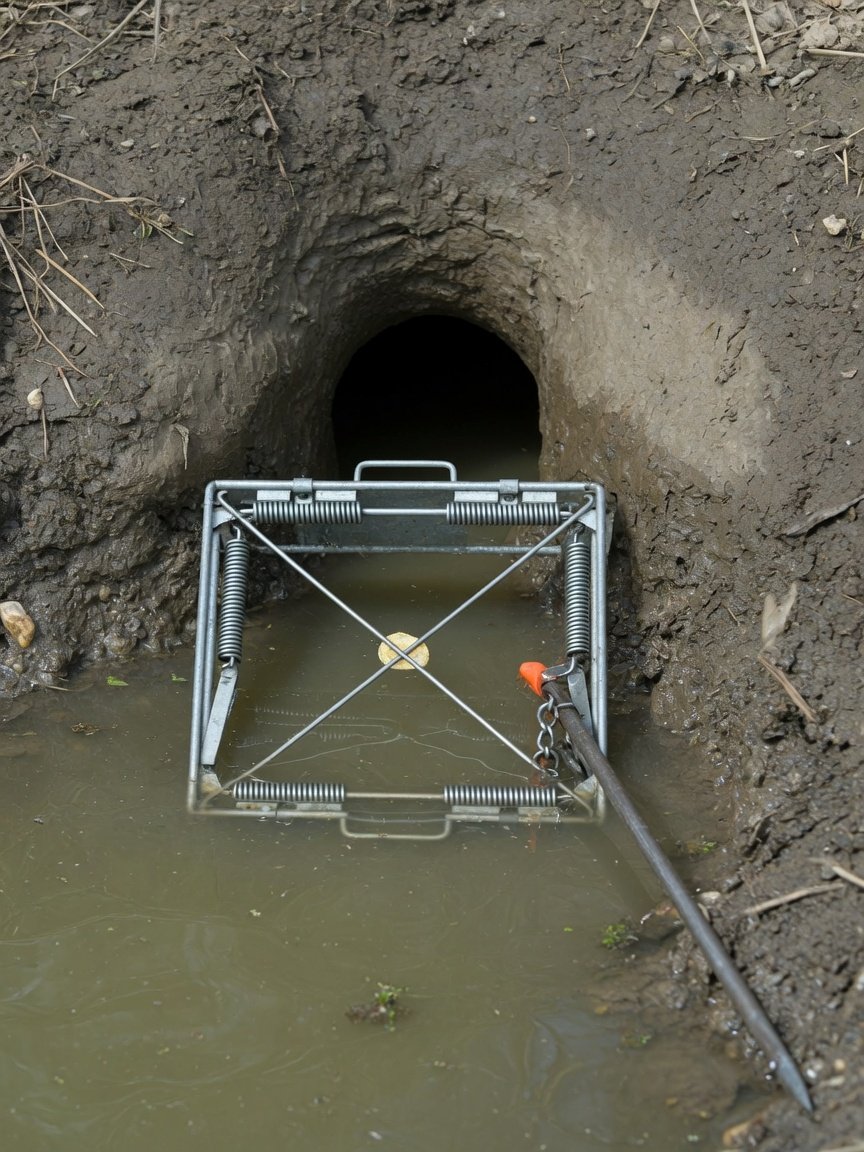
The #110 Conibear body-grip trap (5 inches × 5 inches) is the tool most consistently recommended by wildlife management professionals, university extension services, and state wildlife agencies. It’s a fast-kill trap that dispatches animals quickly and humanely when properly placed at underwater burrow entrances. At $8 to $15 per trap, it’s also highly cost-effective for running a multi-site trap line.
Step-by-Step: Setting a #110 Conibear at a Muskrat Burrow
- Locate active burrow entrances. Walk carefully along the waterline and look for 4- to 6-inch diameter rounded openings 6 to 18 inches below the water surface. Fresh mud disturbance, plant debris, and drag marks near the opening are reliable signs of current activity. At cooler temperatures, watch for subtle rippling near the entrance — muskrats moving through an active tunnel create a faint current.
- Put on rubber gloves. Muskrats have a keen sense of smell. Reducing human scent transfer to the trap and the surrounding set area improves catch rates meaningfully. Keep gloves on throughout the entire process.
- Set the trap following manufacturer instructions. The #110 Conibear is held open by two spring arms and secured with a safety catch. Body-grip traps can cause hand and finger injuries if improperly handled — follow the manufacturer’s specific setting instructions before proceeding.
- Position the trap face flush with the burrow opening. The open trap face should sit directly in front of the tunnel entrance, fully submerged. Muskrats swim straight through the trap frame as they enter or exit the burrow, triggering the mechanism.
- Stake the trap securely. Use a metal stake or heavy-gauge wire to anchor the trap to the bank or pond substrate. A triggered animal must not be able to carry the trap into deeper water where retrieval becomes difficult or impossible.
- Check traps every 24 hours without exception. Daily trap checking is both a humane requirement and a legal mandate in most states. Traps left unattended beyond the legally permitted interval can result in fines even when the underlying trapping activity is properly licensed.
- Reset, relocate, or remove traps based on results. If a trap produces no catch within 3 to 5 days, move it to a different active burrow entrance. Muskrats occasionally abandon a disturbed entrance temporarily before resuming use — waiting a few days before relocating gives the set a fair chance.
Cage Traps: The Live-Capture Option
Cage traps are a practical alternative where lethal traps are prohibited by local ordinance or where landowners prefer a non-lethal approach. Use a medium-sized live trap — roughly 10 × 12 × 32 inches — positioned near active burrow entrances, feeding platforms, or well-worn bank slides. Reliable bait options include apple slices, carrots, parsnips, sweet potatoes, and commercial anise- or vanilla-based muskrat lure. Check every morning and evening; muskrats in enclosed traps can overheat or dehydrate in warm weather.
One important consideration on relocation: most wildlife biologists advise against it. Relocating muskrats simply transfers the problem to someone else’s pond or waterway,” notes Jay Butfiloski, Wildlife Biologist with the South Carolina Department of Natural Resources Furbearer Program. SC DNR research indicates muskrat populations can sustain approximately 75% annual removal without long-term population decline — meaning lethal control, where legally permitted, is the more responsible and durable long-term choice.
Does Habitat Modification Actually Work for Long-Term Muskrat Control?
Habitat modification is consistently underused by pond owners — which is a shame, because it’s the single most effective long-term strategy for preventing reinfestation after a successful trapping program. The logic is straightforward: remove what attracts muskrats to your pond, and new animals scouting from neighboring waterways become far less likely to settle in.
Muskrats are strongly attracted to ponds that offer abundant emergent vegetation, gently sloping soft earthen banks, and shallow water zones 15 to 40 inches deep for nest building. Modifying any one of these features makes your pond measurably less appealing to colonizing animals.
Key Habitat Modification Strategies
- Control emergent vegetation. Mowing, removing, or treating cattails and bulrush along the shoreline eliminates both the muskrat’s primary food source and its preferred nesting material in one step. Aquatic-labeled herbicides can be highly effective for large-scale vegetation management — always read the label carefully and verify your state’s aquatic herbicide regulations before application.
- Steepen bank slopes. Muskrats strongly prefer gently sloping, soft earthen banks that are easy to excavate. Where structurally feasible, regrading banks to a steeper profile makes burrowing significantly more difficult and reduces overall attractiveness to scouting animals.
- Use periodic water level drawdowns. Lowering your pond level 1 to 2 feet during late fall or winter exposes existing burrow systems, collapses active tunnels, and makes the bank environment substantially less suitable for new burrow establishment. This is especially useful in managed farm impoundments where water level control is already available.
- Reduce shallow water margins. Since muskrats prefer nest-building depths of 15 to 40 inches, deepening shallow edge zones where feasible reduces the available nesting habitat footprint of your pond.
- Maintain a mowed buffer zone. Keeping a short-grass buffer of 10 to 15 feet around the pond edge reduces the vegetative cover and food resources that muskrats — and many other nuisance species — rely on when assessing a site.
Do Muskrat Repellents Actually Work?
The honest answer is no. According to the University of Kentucky Extension, the USDA, and multiple state wildlife agencies, no commercial repellents are currently registered for muskrat control in the United States, and none have been demonstrated to be effective, practical, and environmentally safe under real-world field conditions. This conclusion is consistent across peer-reviewed wildlife management literature and extension guidance alike.
You’ll find castor oil-based products marketed for burrowing animal deterrence, and some pond owners report anecdotal short-term results near application points. But the professional consensus is clear: repellents will not drive out an established colony, and their deterrent effect on scouting animals is unreliable at best. Save your budget for proven tools — traps, exclusion materials, and vegetation management deliver the results that repellents can’t.
How Does Exclusion Fencing Protect Your Pond Bank?
Physical exclusion is the most permanent protection you can install for high-value or structurally vulnerable bank sections. It’s a higher upfront investment than trapping alone, but a correctly installed exclusion barrier typically lasts for decades — making it excellent long-term value, especially for dam faces and spillway areas where muskrat burrowing creates the greatest structural risk.
Riprap (Rock Armoring)
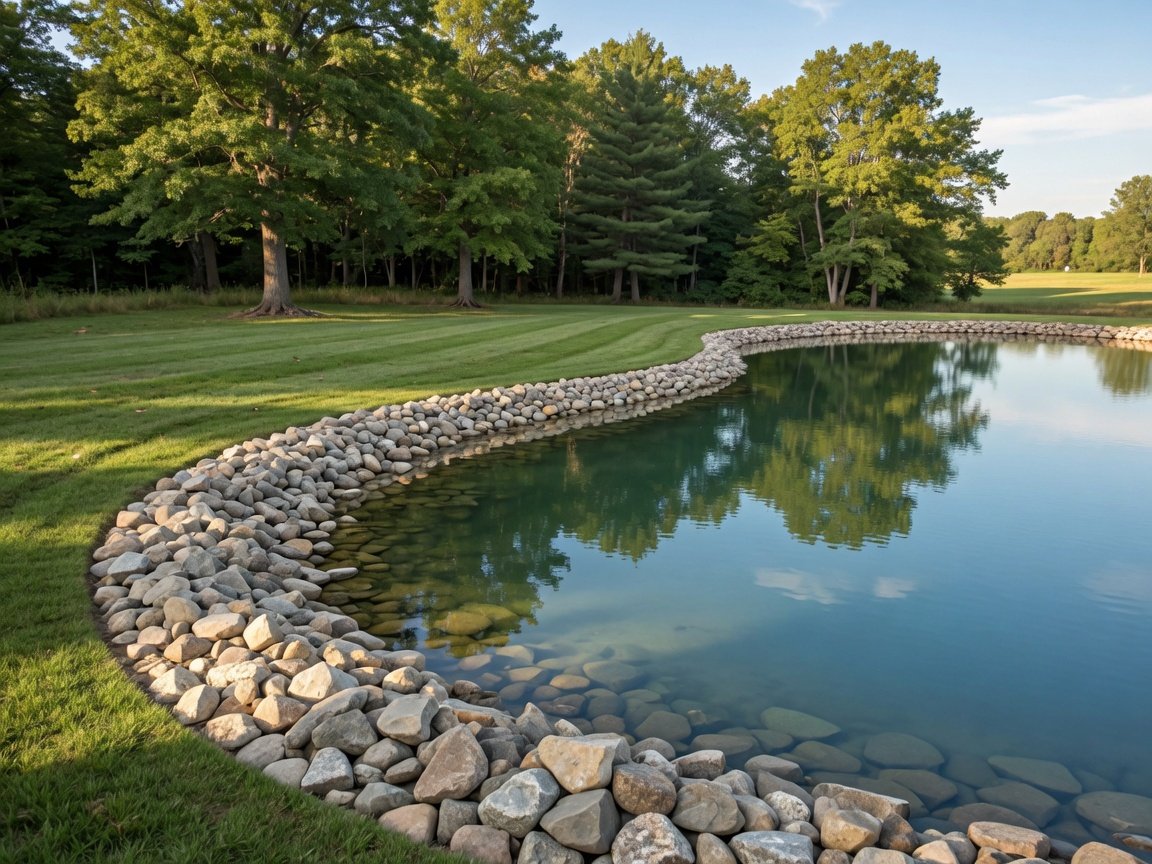
Lining pond banks with angular rock (riprap) is the most widely recommended exclusion method by pond management professionals and dam safety engineers. Muskrats simply cannot burrow through a solid rock face. According to University of Missouri Extension’s pond management guide (reviewed October 2022), effective riprap installation uses a 6-inch layer of coarse stone extending from 1 foot above the normal water level to 3 feet below the water surface. That below-waterline depth is critical — ending the rock layer too high allows muskrats to tunnel under the stone from below, defeating the entire installation.
For most private ponds and farm impoundments, 6- to 12-inch diameter angular stone installed to the correct depth provides durable, effective exclusion. Larger stone or a greater installation depth may be needed for larger dams, steeper slopes, or high-wave-action areas.
Wire Mesh Exclusion
For smaller ponds or targeted bank sections, 1- to 2-inch galvanized welded wire mesh installed vertically along the bank face is a practical and affordable alternative to riprap. Bury the bottom edge at least 12 inches into the pond substrate and extend the mesh at least 18 inches above the normal waterline. Use galvanized or PVC-coated mesh for longevity in permanently wet conditions — standard hardware cloth begins to rust within 3 to 5 years when continuously submerged. Wire mesh works best on shorter, well-defined sections of bank; for large impoundments with extensive perimeters, riprap is generally more cost-effective at scale.
When Should You Hire a Professional for Muskrat Removal?
For most private pond owners, a well-planned DIY trapping and habitat management program is entirely manageable — even for first-timers. But there are genuine situations where professional help is the smarter call.
- Structural damage is already present. If muskrat burrowing has caused bank sloughing, active seepage, or visible dam compromise, you need structural repair and wildlife removal happening in coordination. A pond contractor or engineer experienced with earthwork should assess the damage before any repair work begins.
- You’re dealing with a large-scale infestation. Running a trap line across a 5- to 10-acre impoundment with dozens of active burrows requires significant equipment and experience. Licensed wildlife control operators work efficiently at scale and handle disposal logistics you may not want to manage personally.
- Your state’s regulations are restrictive. In some jurisdictions, licensed nuisance wildlife control operators are the only individuals legally permitted to conduct out-of-season removal. If your state’s rules are complex or you’re uncertain about compliance, a licensed operator keeps you legally protected.
- You can’t commit to daily trap checks. Effective trapping requires genuine daily monitoring. If you travel frequently or work long hours, consistent trap checking becomes difficult — and neglected traps create both animal welfare issues and legal risk. A professional handles this reliably.
Professional nuisance wildlife removal for muskrats typically runs $200 to $800 or more depending on pond size, infestation severity, and your location. Get multiple quotes and ask specifically what’s included — trap placement, daily checking, removal, disposal, and follow-up visits should all be clarified in writing before work begins.
How Do You Keep Muskrats From Coming Back After Removal?
Removing an existing population is only half the job. Ponds that have hosted muskrats before are proven high-quality habitat. New animals from adjacent waterways, drainage ditches, and neighboring ponds will scout and potentially colonize your pond again — sometimes within weeks of a successful removal program — if nothing in the environment has changed.
Durable prevention requires layering several ongoing practices together. Here’s the maintenance program that delivers lasting results:
- Sustain your vegetation management program. Once you’ve cleared emergent shoreline vegetation, maintain it. Annual or semi-annual mowing and targeted spot-treatment keeps habitat quality low for recruiting animals from neighboring areas without requiring a major annual project.
- Install permanent exclusion on your most vulnerable sections. Riprap or wire mesh on your dam face and critical embankment sections is a one-time investment that eliminates your biggest structural risk for decades. If your dam was previously compromised or shows seepage, this should be your top infrastructure priority.
- Walk your shoreline monthly from March through October. Fresh burrow entrances, feeding platforms, and cleanly clipped vegetation are easy to spot during a 20-minute inspection walk. Catching a single scout animal before it establishes a burrow is infinitely easier than removing an entrenched family.
- Keep a trap staged and ready to deploy. Many experienced pond managers leave an unbaited, unset cage trap positioned near the waterline year-round. The moment fresh muskrat sign appears, they set and bait immediately — before the animal has time to excavate a viable burrow system.
- Coordinate with neighbors and drainage authorities. If active muskrat populations persist in adjacent ditches, wetlands, or ponds on neighboring properties, your pond will continue receiving recruits regardless of how well you manage your own water. Regional coordination with neighbors and your county drainage district is the only true long-term solution when source populations are adjacent.
Frequently Asked Questions About Getting Rid of Muskrats in Ponds
How fast do muskrats reproduce?
Very fast. In northern U.S. states, a single female produces 2 to 3 litters per year with 3 to 8 young per litter and a gestation period of just 25 to 30 days, according to the Connecticut DEEP muskrat fact sheet (revised April 2026). In southern states, that number climbs to 5 or 6 litters annually. Young muskrats reach reproductive maturity at roughly 9 to 10 months. Left unchecked in suitable habitat, a pair of muskrats can grow into a substantial colony within 18 months.
Will muskrats leave a pond on their own?
Almost never, provided the habitat remains suitable. Muskrats are territorial and will actively maintain and expand their burrow systems as long as food and shelter are available. While first-year survival rates are only around 33% — roughly two-thirds of young muskrats don’t survive their first year, according to Wildlife Illinois — the breeding rate more than compensates. Waiting and hoping is not a functional control strategy. An unmanaged population will grow, not shrink.
What is the best bait to use in a muskrat trap?
For cage traps, apple slices, carrots, parsnips, and sweet potatoes are all reliable attractants. Commercial muskrat lure based on anise, vanilla, or musk scent also performs well in field conditions. That said, placement consistently matters more than bait. A correctly positioned body-grip trap at an active burrow entrance will catch muskrats reliably on natural travel patterns alone — with or without any additional attractant. When setting a Conibear at a burrow, skip the bait entirely and let location do the work.
Are muskrats dangerous to people or pets?
Muskrats are not typically aggressive toward people or pets under normal conditions. Like any cornered wild animal, they will bite if directly handled or trapped by a dog. More importantly, muskrats are known carriers of tularemia (Francisella tularensis), a bacterial disease transmissible through contact with blood, tissue, or contaminated water. Always wear rubber gloves when handling traps, carcasses, or disturbed burrow areas, and wash hands thoroughly afterward. Standard biosafety precautions make the actual transmission risk very low.
How deep do muskrat burrows actually go?
Muskrat burrow entrances sit 6 to 18 inches below the waterline. From there, the tunnel angles upward through the bank on a gentle incline and can extend up to 45 feet horizontally into the embankment, according to the Missouri Department of Conservation. The dry living chamber at the end of the tunnel can be 10 to 12 inches in diameter and sit up to 15 feet from the entrance. In a standard farm pond dam, that means a single muskrat burrow can potentially penetrate the entire width of the embankment — which is why early detection is so critical.
What is the difference between a muskrat and a beaver in a pond context?
Beavers are dramatically larger — typically 35 to 65 pounds versus the muskrat’s 1.3 to 4.5 pounds. The tail is the fastest visual ID: a beaver’s tail is wide, flat, and paddle-shaped (horizontal); a muskrat’s tail is narrow, scaly, and flattened side-to-side (vertical). Beaver activity leaves unmistakable evidence — gnawed and felled trees, constructed water dams, and large stick-and-mud lodges. Muskrat evidence involves bank burrows, vegetation feeding platforms, and small conical lodges, but no tree felling and no dam construction. Correct identification before you begin a control program ensures you’re targeting the right species with the right methods.
Can I use poison to get rid of muskrats in my pond?
Not practically, and not legally for most pond owners. According to USDA APHIS, zinc phosphide at 63% concentrate is the only federally registered toxicant for muskrat control — and it is a restricted-use pesticide that cannot be applied directly to water bodies. There are no bait products registered for aquatic muskrat control available to the general public. Using unregistered toxicants near a water body risks serious harm to fish, waterfowl, and non-target wildlife — and significant legal liability. Trapping, habitat modification, and exclusion are the legal, effective, and ecologically responsible alternatives.
Start Your Muskrat Control Program This Season
Getting rid of muskrats in your pond is a realistic goal — but it requires a systematic approach, not a single intervention. Trapping alone delivers fast results but leaves the door open for reinfestation from neighboring waterways. Habitat modification alone doesn’t address an existing colony. The combination — trap now, modify the habitat as you go, install permanent exclusion on your most vulnerable sections — is what builds durable, season-over-season protection.
Here’s a practical action timeline to start this week:
- This week: Contact your state wildlife agency to confirm trapping regulations, permit requirements, and legal trap types in your county.
- Weeks 1–3: Walk your shoreline, map all active burrow entrances, and deploy body-grip or cage traps at the most active sites. Check traps every single day.
- Month 2: Begin vegetation management — mow, remove, or herbicide-treat emergent shoreline plants to reduce food and nesting resources for any animals that escape or reinvade.
- Month 3: Assess your dam face and most structurally vulnerable bank sections. Get a riprap or wire mesh exclusion installation planned and scheduled before next season.
- Ongoing: Monthly shoreline inspections from March through October. Trap any new arrivals immediately — before they have time to establish a burrow system.
At The Pondineer, we believe the best pond is one you can actually enjoy — not one you’re constantly worrying about or repairing. Take control of your muskrat problem this season, and you’ll spend your time on the water instead of trying to figure out why your bank keeps collapsing.
—